
August 11, 2025 | Net Health
10 min read
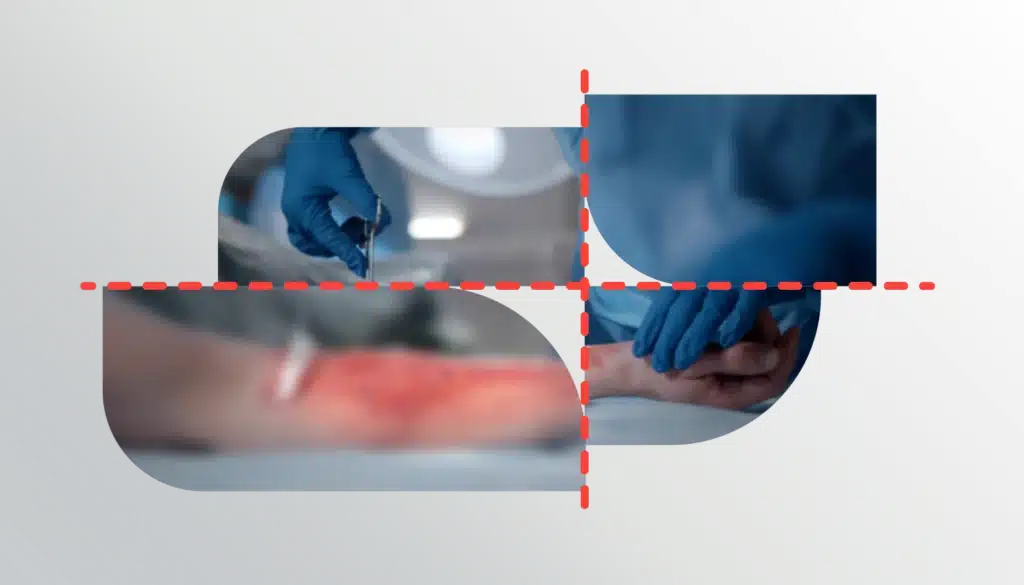
The chemical burn is a distinct and often profoundly damaging form of trauma that demands immediate and precise intervention. Though chemical burns represent a small portion of burn incidents (only near 10.7%), they’ve been reported to account for up to 30% of all burn deaths.
Why?
Unlike thermal injuries, which chemical burns are often confused with, the destructive process initiated by chemical agents can continue long after initial contact, silently deepening and extending tissue damage.
That’s why, for practitioners, especially those working in emergency rooms (ERs), understanding the unique challenges of chemical burns is not just beneficial—it’s critical. The high incidence of chemical exposures, coupled with the potential for severe morbidity and even mortality, underscores the urgent need for prompt, effective treatment.
Below are key details about chemical burns ranging from what they are to how to treat them. Use this information to inform your burn wound care approach, and consider other tools that help assess wounds while you hone your skills.
Defining Elements of Chemical Burns
A chemical burn is tissue damage caused by direct contact with corrosive or reactive chemical agents. This crucial distinction from thermal trauma lies in its pathophysiology: Unlike a heat source, which is typically removed, the chemical continues to react with and destroy tissue until it is thoroughly removed, diluted, or chemically neutralized. This ongoing destruction necessitates immediate and precise decontamination.
How Are Chemical Burns Caused?
Chemical burns are caused by a direct interaction between a corrosive or reactive chemical substance and the body’s tissues. Unlike thermal burns, where damage is inflicted by heat energy, chemical burns are driven by specific chemical reactions that disrupt and destroy cellular structures.
The severity and mechanism of burn injury depend on different factors such as:
- Type of chemical
- Concentration and quantity
- Duration of contact
- Penetration and area of contact
- Physical form (e.g., liquid, solid, gas)
Patients may incur chemical burns through:
- Industrial accidents (spills, leaks, etc.)
- Domestic incidents (household products)
- Laboratory spills or incidents (accidental contact)
- Assaults (acid attacks)
- Self-harm (intentional ingestion)
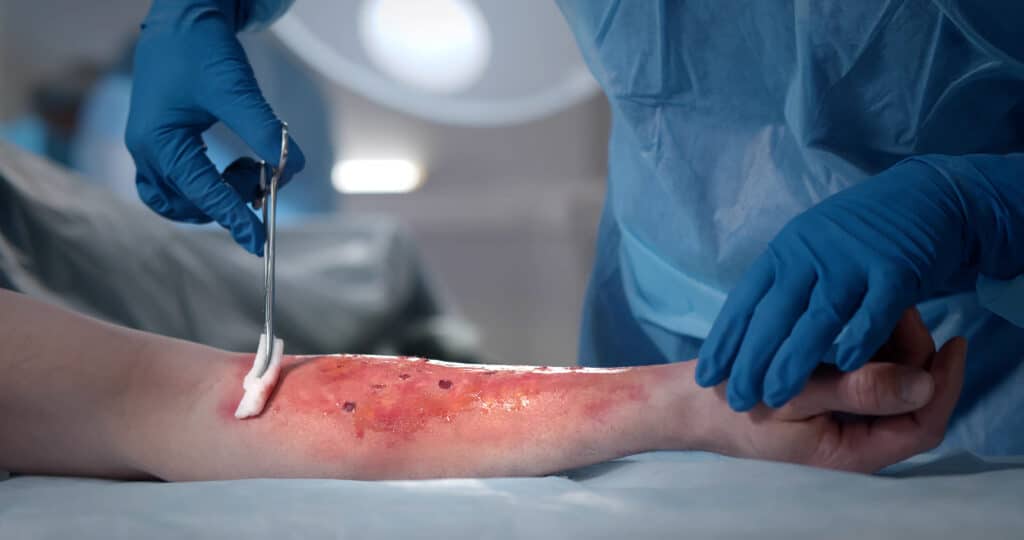
What Does a Chemical Burn Look Like?
One of the most important aspects of treating a chemical burn is first recognizing that it is one. You may consider common signs of tissue damage such as:
- Redness (erythema)
- Pain or numbness
- Blistering (vesicles/bullae)
- Swelling (edema)
- Skin discoloration
- Tissue death (necrosis/eschar)
- Peeling skin
However, these signs can often be mistaken for signs of other burns. So, keep in mind specific appearances based on chemical types such as:
- Acid burns. Acids tend to cause coagulation necrosis, where proteins in the tissue are denatured and coagulate. This often results in a dry, leathery, firm eschar. Skin color varies between whitish/grayish, brown or black, yellowish, and brownish-orange.
- Alkaline (base) burns. Alkalis cause liquefaction necrosis, which is far more insidious. They saponify fats and dissolve proteins, creating a soft, gelatinous, or slippery feel to the tissue. Skin color often appears pale, whitish, or grayish initially but can progress to dusky, translucent, or even dark with further tissue destruction.
- Hydrofluoric acid (HF) burns: Appearance is highly deceptive as skin may initially appear normal, red, or blanched with blisters that typically form later. The hallmark of HF burns is intense, throbbing pain that is disproportionate to the visible injury and delayed for hours.
- Phenol burns. Initially, skin may turn white due to protein denaturation but often progress to redness, blistering, and eventually a brown stain. These burns may be painless initially or feel cool, which can delay recognition and prolong exposure.
- Oxidizing agents: High concentrations of hydrogen peroxide can cause whitening or blanching of the skin, sometimes with stinging. Potassium permanganate produces a characteristic brown or purplish-brown stain on the skin.
- Elemental metals (e.g., sodium, potassium): These metals react violently with water, so the initial injury may be a chemical burn followed by a severe thermal burn as a result of the exothermic reaction. They often cause deep, crater-like lesions.
How to Treat a Chemical Burn
The initial moments following a chemical burn exposure are the most critical. Prompt and appropriate intervention can dramatically alter outcomes, mitigating the ongoing tissue destruction and potential systemic toxicity that characterize these injuries.
Beyond that general advisement, here are key treatment considerations by stage of care.
Pre-Hospital Considerations
While the ER is the primary focus, it’s worth noting the crucial role of pre-hospital care. First responders prioritize scene safety by establishing control zones and donning appropriate personal protective equipment (PPE) before approaching the patient. If safe to do so, they focus on the rapid removal of contaminated clothing and initiation of gross decontamination.
Initial ER Assessment
Upon arrival in the emergency department, the priority shifts to preventing further harm while initiating a rapid patient assessment.
Safety first: The immediate concern is protecting all healthcare personnel from secondary contamination. Donning appropriate PPE, including gloves, gowns, eye protection, and potentially respirators, is non-negotiable. Ensure the decontamination area is well ventilated and designed to contain chemical runoff.
Rapid patient assessment: As with any trauma, a rapid assessment of airway, breathing, and circulation (ABCs) is vital. Pay particular attention to the airway if there’s facial involvement, inhalation of fumes, or signs of respiratory distress. Systemic toxicity from chemical absorption (e.g., altered mental status, cardiac arrhythmias) warrants immediate attention and may necessitate advanced life support interventions.
Identification of the chemical: Identifying the specific chemical involved is crucial, as it guides targeted decontamination and antidote administration. Obtain history from the patient, witnesses, or pre-hospital personnel. Look for chemical containers, warning labels, or material safety data sheets (MSDS) if available.
Decontamination
Decontamination, the cornerstone of treatment and most vital phase in limiting injury, has two main steps.
Remove dry chemicals: For dry chemical powders (e.g., lime, cement, elemental sodium/potassium), it is imperative to brush them off the skin thoroughly before initiating water irrigation. Adding water to some dry chemicals can create an exothermic reaction or generate more corrosive substances.
Perform water irrigation: This is the universal first aid for most chemical exposures. Initiate continuous, low-pressure irrigation with copious amounts of water or saline immediately. The duration should be at least 20-30 minutes, or until the patient reports significant pain relief and, if measurable, the skin pH normalizes. Simultaneously, remove all contaminated clothing, jewelry, and personal items.
Utilize specific decontamination agents as needed, like the following.
- Diphoterine/Previn: These amphoteric, chelating, and hypertonic solutions are gaining traction as broad-spectrum chemical decontaminants. They are designed to rapidly bind, dilute, and neutralize a wide range of acids, alkalis, and solvents. Their availability varies, but evidence suggests they can be more effective than water alone in certain scenarios.
- Calcium gluconate gel (2.5%): For HF burns, follow water irrigation with generous application of this gel to the affected area. Be sure to massage it in continuously. For severe or persistent pain, or if the burn is widespread, you may need infiltrative calcium gluconate (subcutaneous or intra-arterial). If you suspect hypocalcemia, systemic calcium monitoring and administration are critical.
- Polyethylene glycol (PEG): For phenol burns, irrigation with PEG or glycerol is preferred over water, as these agents effectively dissolve and dilute phenol, reducing systemic absorption. If PEG is unavailable, copious water irrigation should be used.
Finally, assess and address ingested chemicals. For patients who have ingested chemicals, immediately consult with gastroenterology and surgery. Endoscopy is the gold standard for assessing the extent and depth of internal injury and should be performed within 12-48 hours, unless perforation is suspected. If perforation is a concern (e.g., signs of peritonitis, subcutaneous emphysema, free air on imaging), immediate surgical evaluation is required.
Pain Management
Adequate analgesia is essential throughout the decontamination and assessment process. Opioids and NSAIDs should be administered promptly to ensure patient comfort and cooperation.
Wound Care Principles (Post-Decontamination)
Once decontamination is complete, standard burn wound care applies. Administer tetanus prophylaxis as indicated. Apply appropriate topical antimicrobials (e.g., silver sulfadiazine, bacitracin) to prevent infection, followed by non-adherent dressings. Elevate affected extremities to minimize swelling.
Systemic Considerations
For extensive or deeply penetrating chemical burns, fluid resuscitation similar to thermal burn protocols may be necessary, adjusted based on the patient’s response and potential ongoing chemical absorption.
Vigilant monitoring for systemic toxicity is paramount, especially with agents like HF (electrolyte imbalances), phenol (neurotoxicity), or organic solvents (organ damage). Serial electrocardiograms (ECGs), electrolyte checks, and careful vital sign monitoring are crucial.
Common Clinical Pitfalls and Other Considerations
Managing chemical burns extends beyond immediate decontamination; it requires vigilance, a nuanced understanding of their progression, and an awareness of potential complications and broader implications.
The “Looks Can Be Deceiving” Phenomenon
One of the most critical pitfalls is underestimating injury severity based on initial appearance. This is particularly true for alkaline burns and hydrofluoric acid (HF) burns.
Alkaline burns, characterized by liquefaction necrosis, may appear superficial or subtle early on, yet continue to penetrate deeply into tissues for hours. HF burns can present with disproportionate pain compared to minimal visible injury, only to rapidly progress to extensive necrosis and systemic toxicity. Always err on the side of caution.
Continuous Monitoring
Chemical burns are dynamic injuries. Their destructive process can evolve and deepen over hours to days, even after initial decontamination. Repeated assessments of burn depth, wound viability, and the patient’s systemic status are crucial. This ongoing evaluation guides further management and helps identify delayed complications.
Airway Management
Inhalation injury, though less common than with thermal burns, can occur with exposure to volatile chemicals, fumes, or if the burn involves the face and neck. Suspect chemical inhalation in cases of stridor, hoarseness, carbonaceous sputum, or respiratory distress. Early intubation may be necessary if it’s anticipated the airway is compromised, as edema can rapidly progress.
Ocular Burns
Ocular burns are ophthalmologic emergencies and require special consideration.
- Extreme urgency: Immediate and prolonged irrigation of the affected eye(s) is paramount, often for a minimum of 30 minutes or until the ocular surface’s pH normalizes (typically 7.0-7.2). Delay can lead to irreversible vision loss.
- Morgan Lens: A Morgan Lens can facilitate continuous, hands-free irrigation, which is invaluable; however, it is contraindicated in cases of suspected globe rupture or protruding foreign bodies.
- Ophthalmology consult: Prompt consultation with an ophthalmologist is essential for specialized assessment and ongoing management.
Electrical Burns
While both can be devastating, electrical burns differ fundamentally from chemical burns. Electrical injuries are characterized by an entry and exit point, with significant deep tissue destruction along the current’s path that is often far more extensive than what’s visible on the skin surface.
They also carry high risks of cardiac arrhythmias, neurological damage, and rhabdomyolysis, necessitating distinct investigative and management protocols (e.g., extensive cardiac monitoring, aggressive fluid resuscitation to prevent renal failure).
Child Abuse
Chemical burns, especially in children, should raise suspicion for non-accidental trauma. Implausible histories, delay in seeking care, or specific burn patterns (e.g., sharply demarcated areas, “stocking-glove” distribution without splash marks, or burns in protected areas like the perineum) warrant thorough investigation and mandated reporting.
Psychological Impact
Beyond the physical trauma, burn injuries, particularly those causing disfigurement or functional impairment, carry a significant psychological burden. Acknowledge the potential for acute stress disorder, anxiety, depression, and body image issues. Early psychological support and referral to mental health professionals are vital components of holistic care.
Remember to Recognize Before Reacting
Chemical burns, with their insidious progression and potential for severe systemic complications, demand heightened levels of vigilance and familiarity from ER clinicians. As we have explored, prompt recognition, aggressive and appropriate decontamination, and continuous monitoring are paramount in mitigating the devastating consequences of these injuries.
Ultimately, the ER clinician stands as the first and often most critical line of defense in minimizing the profound morbidity and mortality associated with chemical burns. Staying up to date on best practices and emerging treatments in chemical burn care empowers clinicians like you to deliver optimal care.
Get the Gold Standard in Wound Care
See the difference a wound care-specific EMR can make for your practice and your patients’ outcomes.