
October 20, 2025 | Jessica Thomas
13 min read
Deemed the body’s largest organ and behaving as a multifunctional protective shield, it’s no secret why our skin is so important. It not only helps regulate temperature and detect sensations, but it’s also the body’s first layer of defense against external harmful forces. Therefore, when patients come into a healthcare setting with an open wound, it needs to be treated with urgency and diligence.
Wound care practitioners understand that when the skin is broken and underlying tissue is exposed, there can be detrimental outcomes. Failing to provide proper open wound care during any stage of the healing process risks negatively affecting a patient’s overall health outcomes. However, if you’re a general practitioner, or in emergency medicine, or simply another specialist who might come across wounds in your clinic, what exactly does that proper treatment look like?
Below, we’ll dive into the different types of open wounds, how to properly care for them, and more.
What Is an Open Wound?
There are two primary categories of wounds: open wounds and closed wounds. With closed wounds, like bruises, patients experience tissue damage beneath the skin’s surface and blood leakage into the surrounding tissues under the skin.
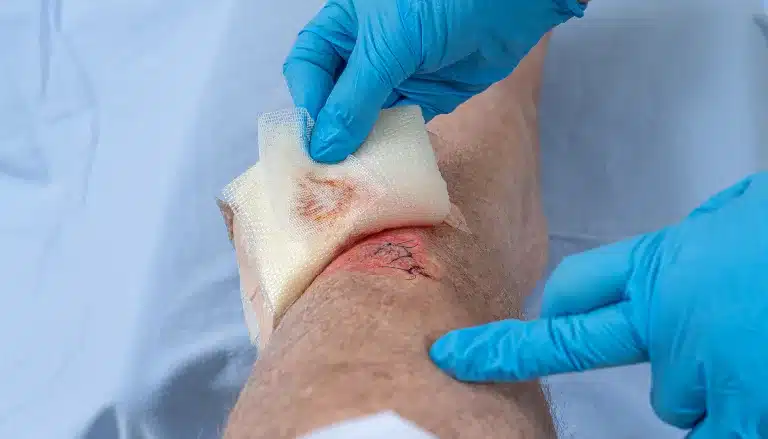
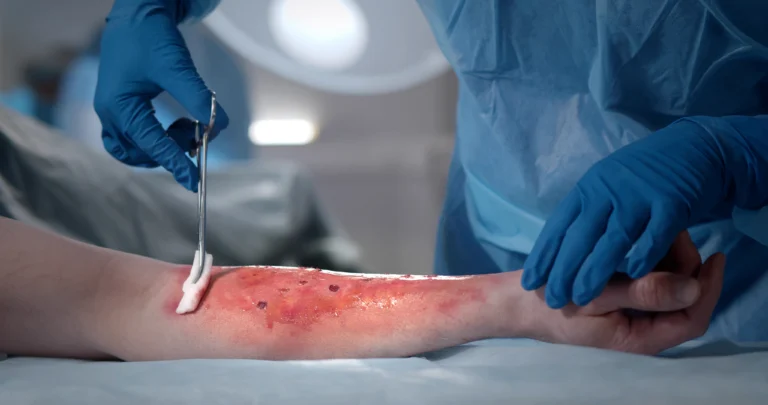
Conversely, open wounds are injuries involving a break in the protective surface of the skin or mucous membranes, as well as exposure of internal tissue. Damage is more clearly observable with these wounds, as blood often seeps from the injury site and underlying structures may be revealed. Open wounds can vary in severity, ranging from minor scrapes that are treatable at home to puncture wounds that can be harder to treat and may require medical attention.
Although open wounds are quite common, it’s crucial to understand that there are different types, each requiring specific treatment protocols. The first step to figuring out how to care for an open wound is to identify it correctly.
Different Types: Open Wounds A to Z
The misdiagnosis of a wound, especially an open one, could lead to preventable and costly complications. To avoid this, consider the different types of open injuries you might encounter in your practice so you’re better equipped to provide effective open wound care later.
Abrasion
A type of wound that practically everyone experiences, abrasion wounds occur when the outermost layer of skin, the epidermis, is scratched, rubbed, or scraped off due to friction or pressure. They’re considered the most common form of injury in children, making up a little over 70% of all reported injuries.
Most skin abrasions are minor, don’t cause significant bleeding, and heal without scarring. However, there are times when abrasions extend into the dermis and cause scar formation. An abrasion might be someone falling from a bicycle and scraping their knee on concrete.
Avulsion
Also referred to as a skin tear, and occasionally constituting a degloving injury, an avulsion wound is one where the skin has been forcefully pulled away or removed from the underlying tissue. This type of wound is considered more serious and often requires advanced medical intervention, such as skin grafting.
If someone’s hand got caught in farm machinery and the force tore skin from their hand, that would be considered an avulsion injury, and in this case, a degloving injury.
Bites
This type of injury can be caused by either an animal or a human, and usually occurs as a laceration, puncture, or abrasion wound. Bites are a particularly concerning type of open wound due to their potential for infection, including things like tetanus. Animals may also carry rabies, a deadly viral disease that’s commonly transmitted through their saliva. It’s uncommon in the U.S., but should be a consideration for wild animal bites or those from unvaccinated pets.
Bites can present as a minor injury, but the bacteria (transmitted from the bite, already present on the skin, or at large in the environment) could enter the wound and lead to severe health implications. In addition, bites have the potential to impair functionality if a patient’s bones and/or muscles are affected.
Cuts
Occasionally referred to as incisions, these are clean breaks or openings in the skin caused by sharp objects, such as a knife or a glass shard. They have well-defined edges and can be long or deep. When the cut is intentionally made by a doctor or surgeon using a scalpel, it is referred to as an incision, so these may show up in your practice in post-surgical patients.
Lacerations
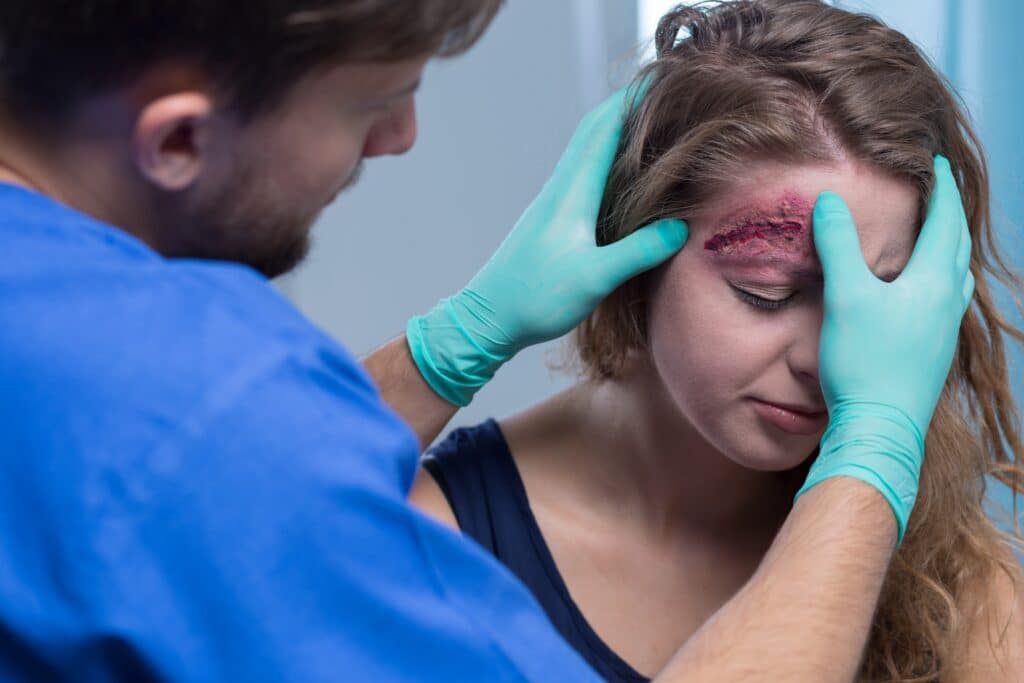
Sometimes used interchangeably with cuts, lacerations are different in that they are a jagged tear in the skin. They, too, are often caused by sharp objects, like a metal lid from canned food, but can also come from blunt force trauma from a fall or impact, or even tools or machinery. They can include wounds with widely varying depths. Deeper lacerations can cause rapid and excessive bleeding and may require suturing and/or surgery to repair damaged tissue.
Punctures
Unlike the clean slices caused by cuts, puncture wounds are narrow and deep injuries that pierce through skin and underlying tissues. Individuals might get a puncture wound from stepping on a nail, being impaled by a pointy object, or getting bitten by a cat or other animal.
Treating puncture open wounds can be tricky, as the injury itself often looks minor and harmless. However, they can cause significant damage to muscles and deeper tissues, as well as severe infections. Patients may not seek medical attention for a puncture wound until hours or days later, when they notice redness, swelling, or pain at the wound site.
What Happens after an Open Wound Occurs?
Whether it’s an animal bite or an abrasion wound, the body kicks off its complex and overlapping wound healing process immediately following an injury. As explained by the National Institutes of Health (NIH), one of the main functions of wound healing is to restore the epithelial barrier: a tight, continuous layer of cells that prevents harmful substances from entering the body. When that barrier is compromised, as is the case with an open wound, the body becomes vulnerable to outside germs, chemicals, and more. Therefore, correcting that damage takes priority to avoid infection and disease.
Let’s take a quick overview of some of the actions that occur during the wound healing process, as this can further help practitioners determine how to care for an open wound of any kind.
Hemostasis
Once the skin experiences an injury, the hemostasis phase begins. At this stage, the body is trying to stop further bleeding and prevent pathogen invasion. Towards the end, growth factors are released that will play a role in future healing phases. Some of the functions taking place include:
- Blood vessel narrowing around the local wound area to reduce blood flow, though blood may still be exiting the wound.
- Temporary fibrin clot plug development.
- Primary fibrin plug formation to seal the wound and act as a reservoir for growth factors.
Inflammation
During this phase, the body aims to remove bacteria and debris so the wound bed is clear and ready to form new tissue.
- Arriving within the first 24 hours and remaining for two to five days, neutrophils, a type of white blood cell, engulf bacteria and dead tissue, sometimes creating pus.
- About three days after the injury, macrophages debride the wound, remove additional debris, and release inflammatory cytokines.
Proliferation
Occurring between two and 21 days after injury, the body is focused on creating new tissue to close the wound. Therefore, the following take place:
- New blood vessels form from existing ones (angiogenesis) to provide nutrients and oxygen to the wound site
- The creation of a thin layer of endothelial cells atop the new extracellular matrix
- Degradation of the fibrin clot
- Granulation tissue formation
Maturation/Remodeling
The final stage of healing begins approximately 21 days after the injury and can continue up to a year. You can expect:
- Ongoing collagen production enhances the tensile strength and elasticity of the healing skin
- Wound contraction takes place, bringing the edges of the wound together for closure
- Scar formation
How to Care for an Open Wound
Now that we’ve explored the different types of open wounds and you’re aware of the wound healing process, it’s time to consider what you can do to optimize the wound’s healing abilities.
As you can see, the body already does a lot of the heavy lifting, but wound care practitioners can help ensure a smooth recovery, especially when healing is stagnant. So, here are some suggestions on how to care for them properly.
1. Perform a Wound Assessment
Before a wound care practitioner can provide treatment, research suggests that they must know “the exact cause, location, and type of wound”. To fulfill those criteria, healthcare professionals should complete a thorough initial wound assessment, carefully evaluating the patient’s local and systemic factors.
This can look like noting any signs of contamination, infection, necrotic tissue, or foreign bodies. It also involves documenting the wound’s depth, width, and level of tissue damage, as this information will be used for comparison by other practitioners at a later time. Assessment also includes reviewing the patient’s medical history, including chronic conditions, malnutrition, and other factors that can affect the healing process.
Wound care providers should check the patient’s tetanus vaccination status, too. Some open wounds are more tetanus-prone, such as those involving rusty objects, dirt, or animal bites.
2. Clean the Open Wound
The wound-cleansing process is crucial to creating an optimal environment for healing. Harmful bacteria, debris, and foreign bodies are all elements that can hinder wound closure, so cleansing is necessary to optimize the healing process. However, how a wound is cleansed does somewhat depend on the type of open wound you’re dealing with.
Cleaning a contaminated wound (open wounds are assumed to be contaminated) typically involves using tap water and a gentle hand soap. In some cases, however, mild antibacterial soap is recommended, such as for bite wounds.
Scrubbing the Wound
If the wound is dirty, scrubbing may be needed, ideally using a fine-pore sponge. You should avoid brushes and rough materials, as they can damage internal tissues and cause inflammation. It’s best to start by scrubbing the skin’s surface around the wound, as you want to prevent foreign material from entering the injury site. Keep in mind that only a portion of the sponge should be used for this purpose. Afterward, use the remaining sponge to scrub the internal surface of the wound.
Irrigation
After scrubbing is complete, and all visible dirt is removed, the wound should be irrigated. The volume of fluid and the pressure used largely depends on the degree of contamination, the wound’s size and its type. For example, with lacerations, you can use higher pressure to irrigate the entire depth and full extent of the wound. However, with puncture wounds, such as a cat bite, irrigation is often kept to the surface and placed on lower pressure settings to avoid pushing bacteria deeper into the wound.
3. Practice Infection Prevention
As a wound care provider, you are aware of the devastating impact of an infection. They not only hinder the wound healing process but also have the potential to worsen health outcomes. Therefore, when caring for an open wound, it’s essential to do the following to reduce a patient’s risk of infection:
- Wash your hands before and after treating the wound
- Change gloves after evaluating a wound and prior to applying a clean dressing
- Use a new probe for measurement and assessment every time you evaluate a wound
If necrotic tissue is present, remove it. Bacteria are attracted to dead tissue because it’s a nutrient-rich environment where they can multiply.
Occasionally, topical antibiotic ointments and creams can be applied with the intention of preventing infection; however, they should be used sparingly. At this time, topical antibiotics haven’t been proven to decrease one’s risk of infection or promote proper healing. Interestingly, though, topical antibiotics are recommended for sutured wounds, but only to stop dressings from sticking and add moisture to the wound edges.
In cases where you encounter a clean-contaminated or contaminated wound, prophylactic antibiotics are indicated. This is especially important if the patient is immunocompromised. According to the American Academy of Family Physicians, “Prophylactic systemic antibiotics are not necessary for healthy patients with clean, noninfected, non-bite wounds.”
A Healthy vs. Infected Wound
As you know, you can’t proceed with an infected wound in the same manner that you would a healthy one. Yet, there might be times when you aren’t 100% clear if the wound is healing normally or if it’s infected.
Research shows that 98% of the time, practitioners rely on clinical characteristics, such as foul odor, purulent drainage, and abnormal granulation tissue, to diagnose a wound infection. Following that, 88% base their diagnosis on the patients’ reported symptoms, and 70% perform wound cultures.
Since wound infection characteristics might vary, it’s not always ideal to base your assessment solely on what you observe and hear from patients. This is why, currently, obtaining wound cultures is considered the gold standard in diagnosing infections, particularly using the Levine technique.
4. Select the Appropriate Wound Dressing
As shared by the NCBI, “one of the primary goals of wound dressings is to protect the wound base from bacteria and contaminants (i.e., urine and feces).” Therefore, you’ll find that dressings aren’t always used for open wounds, especially if the injury seems relatively minor and/or won’t be exposed to dirt or friction. For context, a facial laceration might not need a wound dressing. In situations where a wound dressing is needed, however, you want to select one that aligns with the etiology of the wound, the type of wound, and the wound’s characteristics.
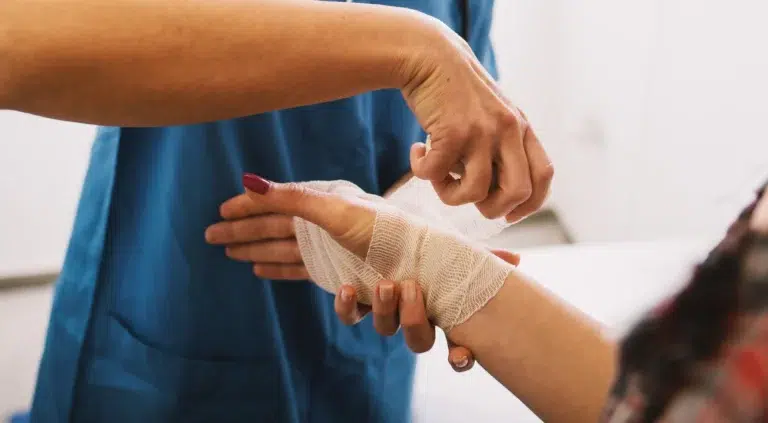
Often, open wounds can simply be covered with a non-adherent dressing or gauze and secured in place with adhesive tape. But there are times when a more thorough dressing is required. For example, if the wound produces excess exudate or significant bleeding, a sterile absorbent dressing should be placed on top of the non-adherent dressing or gauze. Additionally, wounds in areas prone to soiling would best require a sterile, occlusive dressing.
5. Determine the Process for Wound Closure
One of the most important decisions you’ll make when caring for an open wound is the method of closure. Sometimes it makes sense to close a wound via primary intention, which is when the wound is either stapled, sutured, or glued closed. In other cases, healing by secondary intention is most appropriate, meaning the wound is simply left open and heals from the bottom up using granulation tissue.
Primary Intention
Healing by primary intention is often indicated when the dermal edges are close together, there’s minimal damage, and the wound can be adequately cleaned, such as with surgical incisions or clean-edged lacerations. This method is best for fresh, uninfected, and uncontaminated wounds that are less than six to eight hours old.
Secondary Intention
As you know, though, many injuries don’t come with easy-to-clean, neat slices with insignificant damage. Because of this, you’ll find that patients allow some wounds to just remain open and thus heal by secondary intention. There are some cases in which providers might also make the call to allow the wound to heal by secondary intention. However, according to research, wounds that heal this way have a higher risk of infection.
Signs and symptoms that suggest that the wound should remain open, and types of wounds that should be left open, include the following:
- Bite wounds
- Puncture wounds
- Wounds with significant edema and/or inflammation
- Wounds involving the hands, feet, genitals, or perineum
- Wounds with damage to the bone, tendon, or cartilage
- Wounds where the injury occurred several hours before treatment began
- A heavily contaminated wound or one that occured in a contaminated environment
Delayed primary closure
There’s also such a thing as healing by tertiary intention, or delayed primary closure. This is when the wound remains open due to infection or some other reason, but it will be surgically closed at a later date.
It may be indicated in the following circumstances:
- There’s a high risk of wound dehiscence
- The patient has comorbidities, like diabetes
- The patient smokes or uses tobacco
- The patient has a long history of glucocorticoid use
Research also suggests that delayed closure should last between three and five days, or until the infection has resolved, if present.
Your Handy Guide to Open Wound Care
Open wounds are common, but despite their frequency, knowing how to care for them isn’t always straightforward. As we discussed, there are different types, and various factors can affect a patient’s healing process. With all of this in mind, it’s helpful to have guides such as this to lean on.
THE FUTURE OF CARE
Your Guide to Restorative Healthcare Trends
Stay ahead in the ever-evolving healthcare industry with our new Trends Hub. Explore cutting-edge insights and the latest developments shaping the future of care. Your go-to destination for staying informed, inspired, and ready to innovate.