
August 18, 2025 | Net Health
9 min read
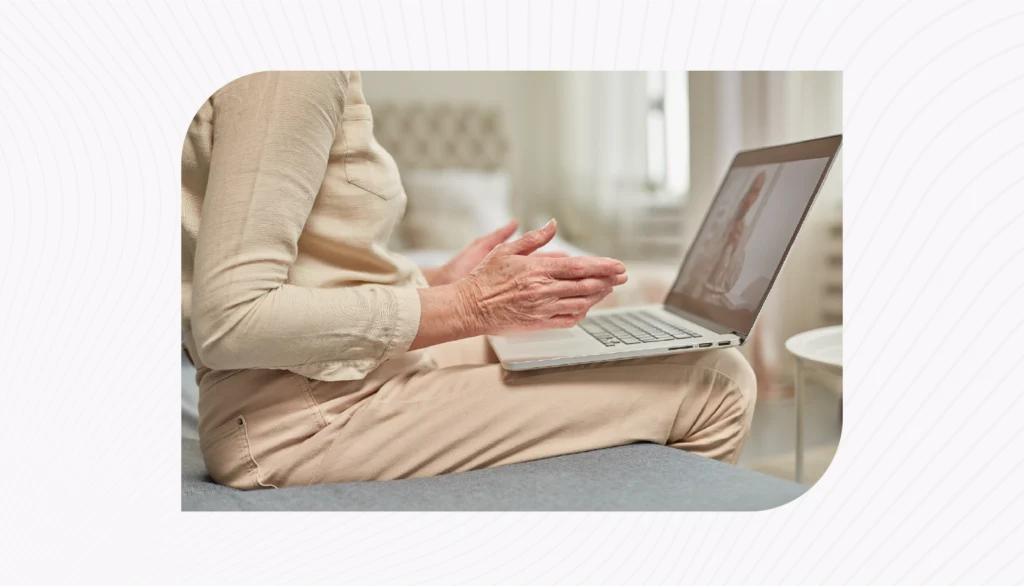
Most organizations, including the Centers for Medicare and Medicaid Services (CMS) and the U.S. Food and Drug of Administration (FDA), define remote therapeutic monitoring as the use of non-invasive devices that measure or detect common physiological parameters and must wirelessly transmit patient information to their health care provider or a monitoring entity. Unlike telemedicine, remote patient monitoring services do not require interactive audio or video. Remote monitoring devices run the gamut from sophisticated apps on smartphones with 2D and 3D imaging features to temperature-sensing socks to fitness trackers.
As technology evolves, and ways to track and respond to data become more sophisticated, remote monitoring is quickly becoming accepted and improving wound care services. Regulations and restrictions around remote monitoring change frequently in response to these advances.
Wound Care Remote Monitoring Technologies Improve Outcomes
One of many reasons that remote monitoring (RM) has secured it’s position among treatment tactics: it improves outcomes for patients. Many patients prefer the option to receive care from the comfort of their homes. The flexibility of remote monitoring makes it possible for them to remain in their homes and decreases the number of in-office visits needed.
For patients who may have transportation challenges, including the elderly or those in rural areas, it can ensure access to care. Data is collected by an app and sent to a physician for analysis, whether the patient is physically present or not. If healing is on track, there is no need for intervention or travelling to an appointment. If the data reveals a concerning trend, continuous monitoring will alert the provider in real time so intervention can begin earlier.
It’s often a better option for clinicians as well, as remote monitoring can be easily integrated into the workflow and enables clinicians to focus more time on patients with serious conditions. Remote monitoring data can alert doctors to patients who may need extra attention early rather than waiting for their next appointment. It can even streamline the process for offices to eliminate routine follow-up appointments that are unnecessary. Recent innovations in RM technology, especially advanced smartphone apps, are helping providers feel more comfortable with remote monitoring for certain patients.
More patients and family members are becoming savvy at using the apps, smartphones, and other remote monitoring devices that supply the data. While certainly not an option for every patient, it can be a great option for many.
Wound Care Remote Monitoring Technologies Manage Costs
Remote monitoring benefits medical facilities and insurance providers as well because it reduces costs. It’s often better for clinicians as remote monitoring gives them more data more often, allowing them to make better decisions about patient care. It also enables them to eliminate routine follow up appointments for patients who don’t need intervention and frees up time for more complex patient care.
Like telehealth, remote monitoring reduces the number of in person visits for each patient. Clinicians can easily review data without patients traveling to the office. This can eliminate copays for the patient, reduce operating costs for the clinic, and lower billing costs for the insurance providers.
Parameters can be established for any factor in remote monitoring. If a patient’s temperature, heart rate, infection factors, oxygen saturation, etc. are outside an acceptable range, alerts notify the patient and the physician, ensuring that immediate action is taken to prevent further trauma. Early intervention reduces readmissions to the hospital, saving tens of thousands of dollars per patient per admission.
RM also improves supply chain management for wound care products. Data about the rate of use of medicines, bandages, and other treatments can help providers better forecast what they will need and how often. Remote monitoring has been found to be associated with more than $3,700 per patient in savings.
Increased Acceptance of RM Technology
The most important signal that remote monitoring is becoming widely accepted in the medical community is the ability to bill insurance providers for service. The Centers for Medicare and Medicaid Services has established guidelines for using remote monitoring and billing for the time spent in association with remoting monitoring.
Billing codes exist for both remote physiologic and therapeutic monitoring. Remote physiological monitoring (RPM) collects and analyzes metrics like blood pressure, weight, oxygen saturation, and blood sugar levels. Remote therapeutic monitoring (RTM) captures data about the patient’s musculoskeletal system, respiratory system, medication compliance, and pain symptoms.
CMS has several requirements for remote monitoring to be reimbursed. Those include:
- Monitoring an acute or chronic condition
- Data is collected for a minimum of 16 out of 30 days
- Only one practitioner can bill for remote monitoring during a 30-day period
- Patient consent is documented
- Only RTM or RPM can be conducted at one time
- The device is FDA approved
- Data must be collected electronically
Codes that providers may use for remote monitoring include:
- 99457, 20 minutes of clinical staff time managing the collected data
- 99453, Initial set up and configuration of the device
- 99454, The cost of the device and necessary technology to transfer the data daily
EHR Coding Improvements for Remote Monitoring
EHRs have continued to evolve to be more friendly toward remote monitoring data. Some may require additional coding, while others can easily adapt. Make sure you consider the functionality of your existing EHR, as well as the support and service they can provide when considering how to incorporate remote monitoring data into your wound care program.
Your EHR should have integrations that enable you to accurately document all remote monitoring metrics and track them over time. The patient’s device needs to transmit the data to the provider, usually via Wi-Fi, Bluetooth, or networks. Without further intervention, that data should be associated with the correct patient, coded, and stored securely in your electronic health record system. Integrating with patient data in the EHR allows providers to better respond to changes. Having the option to view trends over time through graphs and charts improves understanding and early intervention.
To protect the data privacy of patients, all EHRs that are collecting remote monitoring data should be encrypted and connected through a VPN.
Recent Updates to RM Regulations
As we’ve seen, remote monitoring has become accepted in the medical community and is even preferred in some situations to better track healing and progress. Because remote monitoring produces a steady stream of data, outcomes in areas such as wound care are better when remote monitoring is included.
To reflect this increase in adoption, regulations and billing have changed as well. Insurance companies, as well as Medicare, now provide reimbursement for work associated with remote monitoring and have increased its use in recent years.
- In 2025, Medicare increased reimbursement rates for remote monitoring and allows for more frequent monitoring
- Remote therapeutic monitoring no longer requires having an existing relationship with the patient, and a treatment plan and relationship can be established in a variety of ways
- Efforts have been made to improve interoperability between remote monitoring devices and electronic health records,
- CMS has developed a streamlined method of documentation for remote monitoring to improve adoption
- New devices have been approved for RTM and RPM
What Conditions Can Be Monitored Remotely?
Remote monitoring is being used for a variety of conditions. This is especially important in wound care settings, where comorbidity is common. Understanding all of the factors that affect a patient and their healing leads to a more complete picture of health and better targeted treatment plans. Remote monitoring has proven to be useful in monitoring these conditions:
- Heart failure. Measuring arterial pressure can detect early signs of worsening heart failure.
- Diabetes. Blood sugar levels can be measured constantly.
- Hypertension. Monitors can detect changes in blood pressure even for patients who are at high risk but not yet diagnosed.
- COPD. Sensors can detect when symptoms are increasing and prevent adverse outcomes.
- Cancer. For cancer patients, remote monitoring is useful for monitoring adherence to the oral chemotherapy schedule and for managing side effects.
- Kidney disease. Monitors can detect the balance between fluids and electrolytes.
- Post–surgical. Remote monitoring is a great way to closely track vital signs after procedures and catch complications or infections early.
New Developments in Remote Monitoring
Remote monitoring is not only more popular, available, and accepted now, but it also provides more data and can be used in more ways with advancing technology, specifically AI and machine learning advancements. Pairing AI with remote monitoring enables practitioners to better identify patterns and trends, make use of unstructured data, and provide more robust care. AI algorithms can convert large quantities of data into usable information. It can include variables like heart rate, medication compliance, activity level, behavior patterns, and other physiological information and make accurate predictions about outcomes.
Wearable technology also underpins the movement toward personalized medicine. Data, or images, in the case of wound care, about one specific patient compared with millions of other data points supports AI’s recommendations and can identify problematic trends before patients would normally seek treatment from a medical professional or assess how the wound is healing compared to other wounds of similar types and conditions. It can also improve treatment recommendations by analyzing personal data for more nuanced recommendations on healing patterns and the effectiveness of medications.
The Future of Remote Monitoring
The way remote monitoring and other advancements like AI and machine learning interact and improve outcomes will continue to evolve just as quickly as the associated technology. The expansion of 5G networks and other infrastructure improvements in rural areas is just as important as it facilitates the transfer of data and the connectivity of patients to their providers.
RM devices are becoming more sophisticated as well. Newer remote monitoring devices measure much more than heart rate and activity level. Biosensors can now measure important markers such as glucose levels, signs of concussion after an injury, and sodium levels. Smart dressings can measure details of wound healing such as temperature and pH and can deliver the appropriate dosage of medication as needed.
This technology will continue to improve healing rates and times, reduce hospital readmissions, make access to medical treatment easier, and provide cost savings for hospitals and clinics. Shifting treatment from clinical settings to home by enabling remote monitoring for more patients will also improve patient satisfaction and compliance. Remote monitoring is revolutionizing the way wound care treatments are delivered and can better take into account all the factors that affect healing and wellbeing.
THE FUTURE OF CARE
Your Guide to Restorative Healthcare Trends
Stay ahead in the ever-evolving healthcare industry with our new Trends Hub. Explore cutting-edge insights and the latest developments shaping the future of care. Your go-to destination for staying informed, inspired, and ready to innovate.