

March 12, 2026 | Brandon Hastings
9 min read
The landscape of physical rehabilitation is evolving. Many patients—and athletes in particular—are often no longer satisfied with a general approach to recovery. They want specialized, performance-focused care that gets them back to competition, or even helps them prevent injury altogether, not just back to daily life. We can see this desire reflected in the growing size of the global sports medicine market: In 2024, it was valued at $7.30 billion, and it’s projected to reach $15.25 billion by 2033.
For private physical therapy clinic owners, this trend represents the opportunity to shift from simply treating pain to optimizing human performance. Prioritizing sports-focused expansion allows your practice to capture the lucrative athletic demographic, increase revenue streams, and elevate your brand presence in the healthcare market. While your background may be rooted in clinical excellence, the challenge now lies in translating that expertise into a successful business strategy.
Consider this guide your blueprint for overcoming that challenge. Keep reading to learn:
- Three key pillars of sports therapy services
- Relevant services, equipment, and technology
- Operational guidance on integrating these services
- Tips on marketing your new sports therapy services
Defining Your Sports Therapy and Rehab Services
Differentiating general physical therapy and sports medicine-led therapy (i.e., “true” sports therapy) is important, both clinically and from a billing perspective. While general rehab aims to restore a patient to basic functional activities (returning to work or performing activities of daily living), sports therapy goes further in aiming for peak competitive readiness, injury prevention, and optimized performance. The focus shifts from generalized strength and mobility to specific concerns like biomechanical efficiency, power generation, agility, and sport-specific movement patterns.
To build a robust sports service line, consider structuring your offerings around three core pillars.
- Acute and post-surgical rehabilitation: This includes comprehensive, phase-based protocols for injuries like anterior cruciate ligament (ACL) reconstruction, rotator cuff repair, and complex fractures. These protocols must be specifically tailored to meet objective return-to-sport timelines, integrating aggressive, high-load training only when biologically safe.
- Injury prevention and risk stratification programs: Move beyond simple assessments by offering structured testing and training programs, such as established ACL prevention protocols (e.g., FIFA 11+). These can be marketed directly to local high schools, clubs, and training facilities as a cash-pay service or an insurance-eligible assessment.
- Performance optimization: These services target the uninjured athlete. This is a useful revenue stream often billed as cash pay, focusing on improving athletic metrics like sprint speed, vertical jump, throwing velocity, or endurance. Performance work leverages advanced assessment tools to identify and correct sub-optimal movement patterns before they result in injury.
Integrating these services requires grounding your practice in an evidence-based approach . Emphasize the use of current, high-quality literature and protocols to ensure that the care you provide is not just specialized, but defensible and high quality. This commitment to evidence-based practice validates the higher value proposition of specialized sports therapy services to both payers and patients.
| Consider a Pointed Perspective On Sports Therapy & Rehab Services Aligned with the three pillars above (rehab, prevention, and optimization) is a piece titled Performance Physical Therapy is Sports Physical Therapy: Why our profession needs to progress from the International Journal of Sports Physical Therapy. In the article, the author argues for a shift in the mindset of physical therapists from merely restoring a patient to their prior, pre-injury baseline function to actively optimizing and enhancing their performance. The core argument is that traditional physical therapy often focuses too heavily on injury rehabilitation to restore full functional ability, usually in certain activities like walking or general strength. However, this misses the opportunity to address the underlying weaknesses or movement patterns that may have caused the injury in the first place. While surely an interesting read on the surface, this article also strongly validates the need for clinic owners like you to move beyond general rehab and adopt a comprehensive, performance-focused model that will help supercharge athletic patients and future-proof your practice. |
Sports Therapy: Rehab Services, Equipment, and Space
To successfully launch a specialized sports service line and transform your general rehab clinic into a true destination for athlete performance, you must strategically invest in a few key areas.
Advanced Clinical Service Offerings
Differentiate your clinical offering with advanced therapeutic services that specifically appeal to athletes. Consider integrating dry needling or similar myofascial release techniques. These modalities offer rapid muscle recovery and pain management that athletes frequently seek out, often driving cash-pay business or serving as a key tool for managing training load.
While studies are mixed on benefits for healthy athletes, dry needling does have “significant positive effects on alleviating pain in athletes who are suffering from injuries or pain,” according to a systematic review published in Springer.
Similarly, mastering specialized manual therapy techniques that go beyond general soft tissue treatment —such as high-velocity low-amplitude thrusts or complex joint mobilization grades—demonstrates a commitment to high-level musculoskeletal care.
A third, high-value offering is blood flow restriction training (BFR). This technology allows clinicians to induce significant strength and hypertrophy gains at very low loads, a technique that is indispensable for protecting healing tissues in post-surgical athletes while accelerating the rebuilding phase.
Essential Equipment and Performance Space
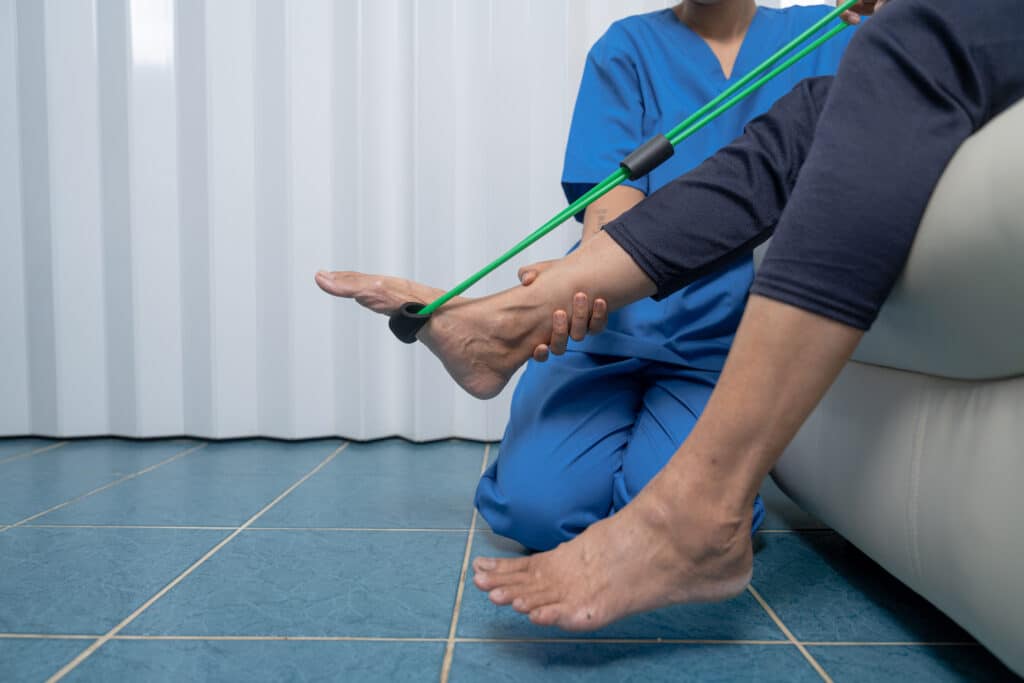
Your equipment investments must align with your performance goals. Standard resistance machines are not sufficient for the high-level athlete. Invest in training equipment like high-quality plyometric boxes, sprint tracks (even short, indoor turf sections will do), specialized resistance bands, and kettlebells/barbells.
In addition, effective space utilization is key. Sports performance can rarely be fully rehabilitated between rows of elliptical machines. You must allocate a dedicated, open zone—ideally featuring turf—for agility drills, cutting maneuvers, and sport-specific training. To help signal to athletes and potential clients that your clinic is equipped for late-stage, high-velocity training, it might help to create a space that feels distinct from traditional treatment rooms.
Technology and Data Collection
Equally important is to prioritize testing and assessment tools that provide objective data. Instruments like force plates, isokinetic dynamometers, or even high-speed video analysis systems move clinical decision-making from subjective feeling to measurable performance metrics, which is vital to meet safe return-to-sport criteria.
This investment is fundamentally linked to the technology edge provided by your electronic health record (EHR). These systems can track outcomes that truly matter to the athlete and any referring surgeons or physicians, moving beyond simple questionnaires to capture objective return-to-sport metrics like change-of-direction speed, vertical jump data, or single-leg hop distances. This objective data is the currency for securing high-value referrals and demonstrating your clinical superiority.
Sports Therapy & Rehab Clinic Operations
The integration of sports therapy and rehab services and equipment requires an equally sophisticated approach to human resources and clinical workflow.
Identifying and Cultivating Specialized Talent
The success of sports rehab services hinges on the expertise of your clinicians. When hiring, prioritize physical therapists who demonstrate a specialized focus beyond general orthopedic care.
Credential Requirements
While a Doctor of Physical Therapy is standard, actively seek clinicians holding specialization certifications like:
- Orthopaedic Clinical Specialist
- Sports Clinical Specialist
- Certified Strength and Conditioning Specialist
These credentials signal a commitment to advanced, evidence-based musculoskeletal and performance practice, building immediate trust with orthopedic surgeons, other physicians, and high-level athletes.
Hiring Strategy
Look for practitioners who understand the unique psychology of the competitive athlete, which involves managing expectations, balancing training load, and navigating the emotional aspects of injury. This dual competence—clinical and athletic mindset—is invaluable.
Training and Professional Development
To maintain a high standard of care, mandatory continuing education should focus on advanced diagnostics (e.g., movement screening, advanced special tests) and modern treatment techniques (e.g., advanced manual therapy, sports-specific phases of rehabilitation).
Create an internal mentorship program where your certified specialists lead clinical rounds or journal clubs to ensure consistent quality of care and continuous learning across the entire team.
Optimizing Clinical Workflow for the Athlete
Operating a specialized service requires adjustments to your standard clinic flow to meet the unique needs of the athletic demographic you’re trying to target.
Scheduling Considerations
Competitive athletes, especially high school and collegiate athletes, require appointments that conflict with general working hours. Implement block scheduling to dedicate late afternoon or early evening slots specifically for high-volume athletic rehabilitation.
This signals that your clinic prioritizes their recovery timeline. Furthermore, set aside non-treatment time for high-volume activities like return-to-sport testing sessions, which can be time-consuming but are critical for data collection.
Communication Protocols
Establishing clear, efficient communication is also important. Implement a protocol for immediate, standardized updates to referring physicians, surgeons, and school personnel, like athletic trainers and coaches. This should include documentation that summarizes the athlete’s current phase of rehab, objective strength and performance metrics, and a clear projected return-to-sport date.
Your EHR system must facilitate easy reporting of this objective performance data to maintain a strong referral loop.
Ensuring Compliance and Quality Documentation
High-level care must be supported by high-quality documentation to ensure reimbursement and justify clinical necessity.
The Importance of Documentation
Documentation must clearly link complex assessments and high-level training (e.g., plyometrics and agility drills) back to measurable, functional, and sport-specific goals.
Generic documentation for a patient performing a high-velocity sprint will likely be flagged by payers. Your documentation should explicitly state why the specialized intervention (e.g., BFR, isokinetic testing) is necessary to meet the athlete’s return-to-sport objective, thereby justifying the specialized care.
Quality Assurance
Regularly audit charts to ensure consistency in the use of specialized CPT codes and the inclusion of objective performance metrics. This proactive approach minimizes denial risks and reinforces the clinical necessity of your specialized services. And, as a bonus, it keeps you prepared if an external audit comes your way.
hybrid care
Grow Your RTM Capabilities with Seamless Hybrid Care
Rehabbing Reimbursement
Specialized sports therapy requires a sophisticated approach, differentiating between insurance-based CPT codes for injury rehabilitation and cash-pay models for performance and preventative services.
It’s important to actively identify key insurance plans popular among athletic demographics and ensure all specialized clinicians are properly credentialed with those payers.
To maximize revenue, you might strategically develop bundled cash-pay packages for preventative screenings, sport-specific testing, or post-discharge maintenance. This captures revenue that falls outside traditional medical necessity, providing immense, marketable value to the athlete and reflecting the higher quality of your specialized care.
Marketing Your Sports Therapy & Rehab Services
And speaking of marketability, your growth depends on marketing that speaks directly to the athletic community and its key referral sources. Not to mention, if this is a new service your practice will be offering, marketing is essential to alerting your current and potential new patients that you have new services available. General marketing typically doesn’t cut it in this niche. Your strategy needs to demonstrate measurable, specialized value and objective outcomes.
Start by building robust referral networks, cultivating strong relationships with local orthopedic groups, sports medicine physicians, and high school athletic directors. These professionals need assurance that your clinic offers superior, data-backed care.
Augment this network with a compelling digital presence, utilizing social media to showcase specialized equipment and share successful return-to-sport stories (with consent).
Finally, increase visibility through community outreach, maybe through initiatives like sponsoring local teams or hosting free injury screenings and educational workshops for coaches and parents to establish your practice as the trusted local expert.
Optimizing Clinic Performance & Sports Rehab Outcomes
The strategic decision to specialize in, or at least add an offering for, sports therapy elevates your clinic beyond standard rehabilitation to establish a unique and premium value for the community.
In focusing on advanced staff expertise, high-performance tools, and meticulous data tracking, you are actively investing in measurable outcomes and a distinguished brand identity for athletes and athletically inclined patients.
Further, a commitment to specialized, data-driven excellence is the foundation that secures long-term, high-value referrals, supports value-based pricing, and ensures the sustained growth of your practice in a competitive marketplace.