
December 8, 2025 | Jessica Thomas
10 min read
One of the most interesting biological processes our body performs is wound healing. Whether it’s an intentional wound, such as a surgical incision, or an unintentional one, like a cut from a fall, the body undergoes a complex journey through stitches healing stages to repair itself. However, sometimes our bodies need a little help, and that’s where stitching comes in.
Stitches are a common tool used in wound repair intended to assist the body’s natural healing process. But how exactly do they work? While many understand the visible result they produce, few are aware of how the wound is truly expected to heal or how that healing reflects the biological process happening underneath.
Now we’ll explore the intricate connection between stitches and the healing process, the warning signs of a problem wound, and more.
Stitches Healing Stages: How Do They Work?
Stitches, also known as sutures, are used to bring wound edges together to promote proper healing. When a wound is closed in this manner, it’s referred to as closure by primary intention. With that method of closure, surgical glue, staples, or adhesive strips of tape can also be used to approximate the wound edges. However, according to research, sutures are considered the standard of care, or the go-to method, for wounds closed via primary intention. That means they should follow the expected stitches healing stages as they recover.
In terms of how they work, it’s easiest to think of sutures like a bridge; their structural support enables the body to focus its energy on repairing the tissue below the surface. Keeping the wound edges closely aligned helps with:
- More efficient healing. With sutures, the body doesn’t have to produce as much temporary tissue, known as granulation tissue. By approximating the edges, it reduces the amount of space the body needs to fill in the gap, allowing for a more efficient healing process.
- Less scarring. Plenty of research has found that the formation of granulation tissue is proportional to the level of scarring the healed wound will develop. Because stitches require less of this temporary granulation tissue, the wound will often create a smaller, less noticeable scar.
- Reduced risk of infection. By pulling the wound edges together, stitches create a barrier between the environment and the wound, making it less likely for bacteria and other contaminants to enter the wound and reproduce.
What Are the Different Types of Stitches?
Now that we’ve come to a collective definition on how sutures work, it’s important to clarify that there are different types.
Absorbable vs. Non-Absorbable Sutures
Stitches typically fall into two main categories: absorbable and non-absorbable.
Absorbable Sutures
Absorbable sutures dissolve in the body over time. They eventually lose their tensile strength, typically within a few weeks to several months after implantation. They’re most often used for temporary deep closures that need more time to heal, or injuries where suture removal would be challenging. When used in this manner, absorbable stitches can help facilitate wound healing as part of a multi-layered closure and limit defects.
It’s important to note, though, that absorbable sutures should be used on the skin’s surface sparingly, as they can lead to more inflammation and increase the likelihood of scarring.
Non-Absorbable Sutures
Unlike absorbable stitches, non-absorbable sutures do not dissolve in the body on their own. These are often used to provide long-term or permanent tissue closure. Surgeons primarily use them in situations where wounds must remain securely closed for extended periods, such as during the repair of blood vessels or hernias. Other times they can be removed in 1-2 weeks, like when used for skin closure post-surgery or to close an open wound.
Suture Structures: Monofilament vs. Multifilament
Additionally, sutures are categorized into two main structural types: monofilament and multifilament.
Monofilament sutures are single-stranded, allowing them to glide through tissue more smoothly and, in turn, causing less tissue irritation and inflammation. Their drawback, though, is their high degree of memory, which means they tend to return to their original shape; this makes them more challenging to handle. Monofilament sutures are also more prone to knot loosening, so additional knots might be required to keep them secure.
As the name suggests, multifilament sutures are designed with multiple braided or twisted strands. These hold less memory, making it easier for providers to handle since they don’t return as easily to their original shape. They also hold knots more securely. One of their disadvantages, however, is that their braided structure causes increased friction, which can potentially lead to inflammation and infection.
Other Suture Factors: What Matters in Wound Healing?
In addition to the categories mentioned above, healthcare professionals must also consider some other factors, which we’ll dig into here.
- Suture material: They can be made from natural materials, such as silk, or synthetic, like nylon. The choice could affect the body’s inflammatory response and impede healing.
- Dye use: Some sutures are dyed, making them more visible to a surgeon; however, a patient’s skin may react poorly to dyes.
- Suture surface: Sutures might have a smooth surface or contain tiny barbs. The latter eliminate the need for knots, enabling practitioners to work more efficiently.
- Breaking strength: Stitches should be strong enough to hold the wound edges together but not so strong that they damage the delicate tissue.
- Needle type: Needles come in different sizes and shapes, along with varying points. The needle selected should cause the least amount of trauma to the tissue to promote a cleaner and more streamlined healing process.
What’s the Timeline for Healing Stitches?
As much as we’d like them to, wounds don’t heal overnight. They must complete a specific process, whether via primary or secondary intention. The process follows a series of stages over several days, weeks, and sometimes months. While each individual and every wound is unique, they typically follow a predictable course of events, which we’ve been referring to as stitches healing stages. That is, unless you’re dealing with a chronic wound.
When healing is going normally, this process is generally what you can expect.
Days 1 – 3: The Initial Reaction to Suture Placement
The moment a wound occurs, the body immediately initiates hemostasis in an effort to stop the bleeding. When wounds require medical intervention, healthcare professionals prioritize cleansing the injury and controlling the bleeding.
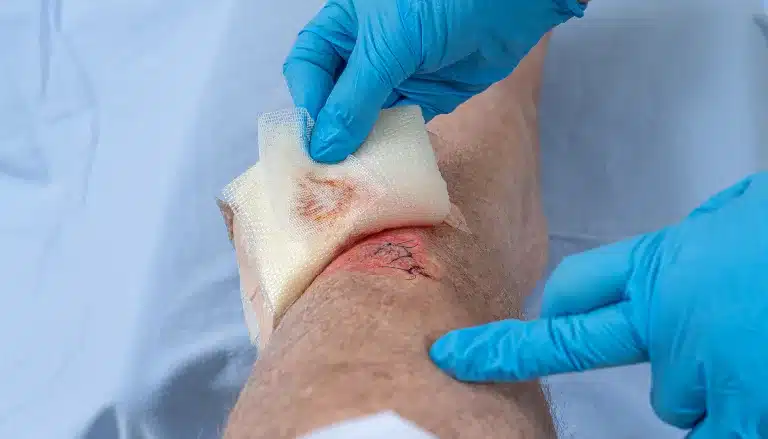
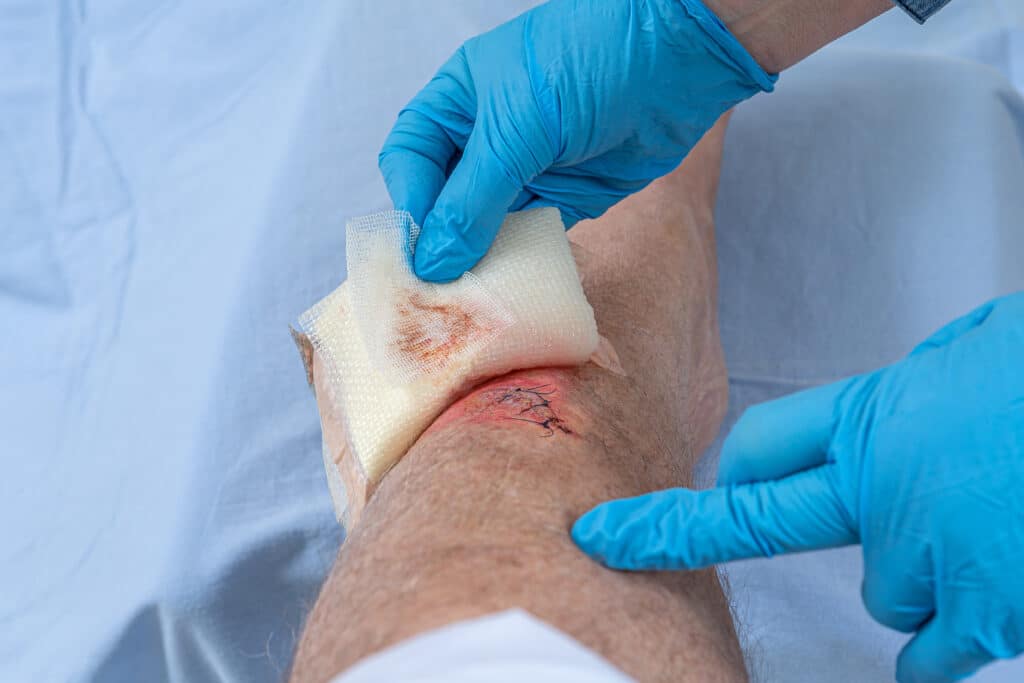
Stitching is typically performed after hemostasis and during the very early part of the inflammatory phase. This is viewed as the most visible healing phase, as the stitched wound may appear red, swollen, and bruised following the procedure. Patients might even experience moderate pain at the site.
While sometimes alarming to patients, this is usually completely normal and a sign that the body’s immune system is at work. It’s during this phase that cells move to the injury site to clear debris, fight off potential bacteria, and prepare the foundation for new tissue.
The Role of Stitches During the Inflammatory Phase
During this time, stitches are crucial for maintaining wound integrity, as they help keep the skin together to prevent it from reopening. They reinforce the closure of the wound’s edges as well, which aids immune cells in infection prevention so they don’t have to work as hard.
Days 3 – 14: The Proliferation Phase
Also called the granulation phase, think of this part of healing not as a single event, but as a constant process that overlaps with other stages. Here’s what’s happening:
- Specialized cells, known as fibroblasts, begin to form a new network of collagen and other proteins, resulting in the creation of granulation tissue
- Re-epithelialization occurs, with cells from the wound edges starting to migrate and multiply. A thin layer forms initially and then becomes thicker and more durable over time
- The body develops new blood vessels to restore blood flow to the area, ensuring the wound receives the oxygen and nutrients it needs
- The wound will start to shrink as it heals
How Do Sutures Help During the Proliferation Stage?
While the stitches aren’t involved in the cellular work at this stage, they play a vital role in helping. For instance, they hold the wound edges together to reduce the space that the body needs to fill with new tissue. Stitches also facilitate re-epithelialization, making it easier for skin cells to migrate and regenerate. They help the wound edges maintain alignment, controlling the contraction process and minimizing scarring.
If non-absorbable sutures were used, they’d likely be removed one to two weeks after they were placed, falling during the proliferation phase. “When” they’re removed ultimately depends on factors like where the stitches were placed, the patient’s age, underlying medical conditions, and other factors.
By the maturation phase, it’s believed that these sutures have done what they were intended to do: help the wound gain initial strength. Keeping them in longer might be counterproductive and even cause the immune system to recognize them as foreign bodies and generate an inflammatory response. Thus, the stitches should be removed by the end of the proliferation stage.
Weeks 3 and Beyond: The Maturation Phase
Lasting up to a year or more, this stage is all about the body refining the work it’s done. Any excess collagen created in previous phases is broken down during this stage. The wound also continues to contract, bringing the edges closer together. A scar is eventually formed, which can be minimal, but the tissue will only reach about 80% of its previous strength.
The Role of Sutures During the Maturation Stage
Only absorbable sutures are still in place at the maturation stage. The dissolvable stitches’ healing stages aren’t much different from the non-absorbable ones. However, there are key differences in healing.
With absorbable stitches, two primary changes have likely happened to the sutures by the maturation stage:
- Loss of strength. The suture has lost most, if not all, of its tensile strength. For example, a material like polyglactin still retains 75% of its tensile strength at two weeks and 50% at three weeks. But by days 56 and 70, roughly weeks eight to 10, the body has likely absorbed it entirely.
- Passive presence. If the suture is still present, it’s mostly broken down. It’s no longer providing the necessary tensile strength to maintain structural support. Instead, the new tissue has taken over and is actively remodeling itself, with the dissolving suture simply fading away in the background.
When to Be Concerned About Stitches: Recognizing Red Flags
Now that you know what healthy wound healing looks like with stitches, it’s just as important to identify the signs that healing isn’t going as planned. These are the signs and symptoms medical providers need to look for.
- Maceration: If the skin begins looking pale, soft, and/or wrinkly, that’s a sign of excessive exudate production, wound incontinence, or something else. Maceration can weaken the skin and delay the healing process.
- Fever or chills: These systemic signs indicate the body is fighting a widespread infection, not just a localized wound problem.
- Worsening pain: Experiencing pain at the wound site, like a throbbing sensation, that doesn’t improve after a few days, is a sign of a complication.
- Wound reopening: If the wound’s edges separate or the stitch breaks, there may be excessive tension or an infection, requiring medical intervention.
- Pus or other discharge: A small amount of clear fluid is normal, but if it’s yellow and accompanied by a foul odor, that’s a sign of an infection.
- Increasing redness or swelling: Slight redness and swelling are normal, but if it starts spreading to the periwound area or worsens instead of improving, this may indicate that an infection is present.
Stitches Healing Stages: A Key Element of Wound Care
As you can see, stitches do much more than just hold skin together. They help guide the body’s natural, yet complex, healing process, ensuring it’s carried out as efficiently as possible. Sutures also provide the structural support that wounds need to recover with minimal scarring and a lower risk of infection.
While most people are familiar with stitches, it’s uncommon for them to always understand or remember stitches healing stages and exactly how they work—sometimes even medical professionals need a refresher of the basics. Now, though, you can walk away with a clearer understanding of their role, empowering for both patients and wound care providers alike. Additionally, by understanding the “why” behind stitches and recognizing the signs of improper healing, individuals (both patients and providers) can be more proactive in ensuring their recovery journey is as smooth as possible.
What Are Wound Care Leaders Thinking Right Now?
Leaders are optimistic about innovation, but honest about challenges that face healthcare.