
January 5, 2026 | Brandon Hastings
8 min read
When a patient presents with a seemingly minor superficial wound, it can be a deceptively straightforward case. The immediate clinical focus often defaults to basic wound care: cleaning, dressing, and patient education. However, the apparent simplicity of an abrasion, small laceration, or first-degree burn can be a trap.
Whether presented in a standard clinic or ER setting, these injuries, while minor in themselves, can be outward signs of a more significant, and even potentially life-threatening, underlying trauma.
This guide for physicians, nurses, and EMTs challenges the assumption that a simple wound equals a simple patient encounter. We’ll explore the hidden dangers and systemic implications under the skin’s surface, emphasizing that a thorough, holistic examination is not merely a best practice, but actually an essential component of patient safety and effective care.
What Is a Superficial Wound?
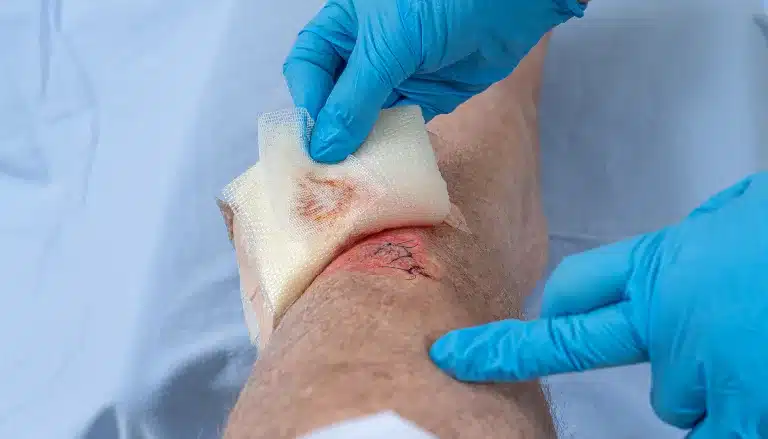
A superficial wound is an injury that affects only the outermost layers of the skin, namely the epidermis and the uppermost portion of the dermis. Unlike more complex wounds, superficial wounds do not extend into the deeper subcutaneous tissue, muscle, or bone.
This category of wounds encompasses a variety of common presentations like:
- Abrasions, often referred to as scrapes or “road rash.”
- Lacerations, notably ones that are simple and non-penetrating.
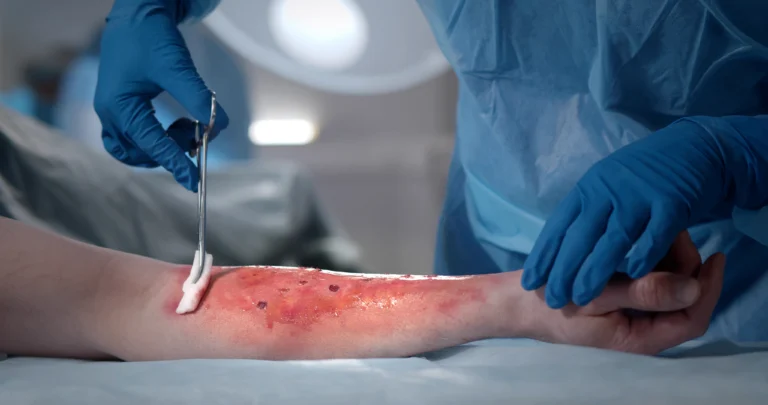
- First-degree burns, characterized by redness and mild pain without blistering.
The management of these wounds is generally straightforward, focusing on the core principles of wound care: gentle cleansing to remove debris, achieving hemostasis to control any minor bleeding, and applying an appropriate dressing to protect the area from infection.
This simplicity, however, is often what leads to the diagnostic pitfall of overlooking a broader clinical picture.

The Deceptive Nature of Superficial Wounds
The greatest paradox of superficial wounds is that their apparent insignificance can create a powerful cognitive bias in a busy clinical setting—in other words, they look simple, so the patient’s case must be simple. This can narrow a practitioner’s focus, leading them to miss other, more severe injuries.
The severity of a wound’s surface appearance does not always correlate with the severity of the traumatic event that caused it. Therefore, a comprehensive patient history and physical examination are a crucial step, regardless of how minor the presenting wound seems.
A practitioner’s first priority must be to understand the mechanism of injury and systematically rule out any associated conditions.
Guidance: Superficial Wounds & Associated Injuries
Beyond the visible wound, a thorough assessment of the patient’s condition is essential to identify associated injuries that can be far more serious. Here’s a table of common clinical scenarios involving superficial wounds and relevant responses to their presentation.
| Clinical Scenario | Description | Response |
| Superficial head laceration with concussion | A minor scalp cut can be a sign of a traumatic brain injury (TBI). The force required to cause a scalp laceration is often sufficient to produce a concussion or other intracranial injury. According to a cross-sectional study published in the Bulletin of Emergency And Trauma, scalp lacerations were associated with intracranial injuries in approximately one in five (20%) patients with mild TBI. | A thorough neurological assessment is key, focusing on a history of loss of consciousness, amnesia, or any subtle changes in mental status. Practitioners must also look for symptoms such as persistent headache, dizziness, nausea, photophobia, or difficulty concentrating. In all cases where a head laceration is present, imaging via a CT scan is a recommended course of action due to the high incidence of associated intracranial pathologies. |
| Abrasion over a bone fracture | A seemingly benign scrape or abrasion can be the only external evidence of a more significant underlying fracture. This is particularly common in injuries from falls or blunt force trauma, where the impact energy is transmitted through the skin to the bone below. | Practitioners should palpate the area around the wound for any signs of point tenderness, crepitus, or deformity. They must also assess for restricted range of motion and swelling, which may not be immediately obvious but could indicate a fracture. |
| Puncture wound on the chest wall with pneumothorax | A small, innocuous-looking puncture wound, which might be dismissed with a simple cleaning and bandage, can hide a life-threatening internal injury like a tension pneumothorax. The small size of the external wound belies its depth, as it can allow air to enter the pleural space with each inspiration, leading to a collapsed lung. | Clinical suspicion is important. Practitioners should assess the patient for acute dyspnea, pleuritic chest pain, or a sudden change in respiratory rate. On examination, a decrease or absence of breath sounds on the affected side and signs of tracheal deviation are urgent indicators of a life-threatening complication. |
Puncture and Undermining Wounds
The deceptive nature of superficial wounds is particularly acute when dealing with puncture wounds. While they may appear minor on the surface, their true danger lies in the depth of penetration and the potential for a concealed, life-threatening condition. The risk is compounded by a high potential for contamination and the introduction of foreign bodies.
Puncture Wounds
A puncture wound is an injury caused by a sharp, pointed object that penetrates the skin. Its defining characteristic is a small entry point that belies the potentially significant depth of the wound, which can extend into deeper tissues, organs, or even bone.
Risks
The narrow channel of a puncture wound creates a perfect environment for infection. This is due to the difficulty of proper cleansing and debridement, plus the potential to drive bacteria deep into the tissue.
The risk of anaerobic bacterial infections is high. Furthermore, a foreign body—such as a piece of wood, metal, or glass—may be retained deep down within the wound, leading to abscess formation, chronic inflammation, or even a non-healing wound. In more serious cases, a puncture wound can perforate an internal organ, vessel, or nerve.
Assessment
The assessment of a puncture wound must be methodical and thorough. Practitioners must first determine the object involved, the depth of penetration, and the patient’s tetanus immunization status. The wound should be carefully explored to assess for retained foreign bodies.
“Stab and puncture wounds cause injuries via a trajectory of tissue disruption that can be identified on imaging,” note the authors of an article on trauma imaging. Thus, imaging—such as an X-ray or ultrasound—may be necessary to rule foreign bodies out, as well as to assess for underlying damage to bone or organs.
Undermining and Tunneling Wounds
An outwardly simple wound can also present with complex sub-surface pathologies. Undermining refers to the destruction of tissue beneath the intact skin around the wound edge, creating a space or “shelf.” Tunneling, or sinus tracts, are narrow channels that extend from the wound into the surrounding tissue, forming a path for infection to spread.
Risks
The presence of undermining or tunneling is a clear sign that the wound is not healing correctly. These spaces can harbor bacteria, leading to chronic infection, delayed healing, and a higher risk of systemic complications like cellulitis, osteomyelitis, or sepsis. They also make effective debridement and cleansing extremely difficult.
Assessment
Practitioners should always assess for undermining and tunneling, even in a seemingly simple wound. This involves using a sterile, soft-tipped applicator to gently probe the wound edges and base. Any space or channel that is found should be measured and documented, as this will directly influence the treatment plan.
Keeping Superficial Wounds from Becoming Chronic
While proper wound care is essential, a superficial wound’s journey from acute to chronic can be a reflection of systemic patient factors rather than a failure of local treatment.
The normal healing process is a finely tuned continuum involving inflammation, proliferation, and remodeling. This process can be significantly impaired by underlying comorbidities that compromise the body’s ability to repair itself.
- Diabetes mellitus and peripheral arterial disease: These conditions are particularly impactful, as they lead to poor circulation and neuropathy, thereby limiting the delivery of vital nutrients and oxygen to the wound site.
- Malnutrition and immunosuppression: Malnutrition depletes the body of the necessary building blocks for tissue repair, while immunosuppression leaves the wound vulnerable to chronic infection.
- Systemic inflammatory conditions: These conditions can also cause a state of constant inflammation that prevents the wound from ever entering the proliferative phase of healing.
Therefore, the final and most crucial actionable step in the assessment of any wound, regardless of its size, is to take a comprehensive patient history. Practitioners must look beyond the immediate incident to uncover these underlying factors, as they will directly impact the plan of care. A holistic approach that addresses these comorbidities is essential to ensuring successful healing.
Superficial Wounds and the Practitioner’s Imperative
It’s safer to assume a wound is never just a wound, or that a wound is merely superficial; rather, it is a symptom of a larger event. From a minor head laceration that hides an underlying concussion to a simple abrasion that conceals a complex fracture, a practitioner’s most critical responsibility is to look beyond the visible.
We built this guide as a refresher on wound care to-dos, and reminder that the art and science of wound care require a shift in perspective—from simply treating the immediate injury to understanding the patient’s complete clinical picture.
Practitioners who maintain a high level of clinical suspicion and adhere to a holistic assessment can identify and manage not only associated injuries but also the systemic patient factors that can turn an acute wound into a chronic, non-healing burden.
This dedication is what truly defines a practitioner’s expertise and ensures patient safety. A practitioner can transform a routine encounter into a comprehensive diagnostic event, securing a path to recovery that extends well beyond the skin’s surface.