
November 24, 2025 | Brandon Hastings
9 min read
Removing staples from a healing wound is a routine procedure many healthcare providers encounter, from family practitioners to nurses in urgent care settings and many more. But what do you do about wound care after staples are removed?
This is a pivotal transition in the wound’s journey to full recovery. After all, the skin’s new bond is still fragile and requires careful management to prevent reopening, infection, and/or undesirable cosmetic results.
Below is a practical framework for providers to confidently handle wound care during this critical time. We’ll explore assessing the wound’s response after staple removal, post-staple removal care, patient education, and more. By focusing on these key details, you can significantly influence a patient’s healing trajectory and help ensure the best possible outcome.
Why Staples Are Used and How They Aid in Healing
Surgical staples offer significant advantages in wound closure as opposed to other closure methods like nylon sutures, making them a preferred choice for many clinical scenarios. Their primary benefits include:
- Speed and efficiency. Staple application is often faster than suturing, which can be critical in emergency situations or complex surgical procedures where minimizing operative time is a priority. One study comparing skin staples to standard sutures for closing incisions after head and neck cancer surgery found that staples “offer ten times faster wound closure,” among other advantages.
- Reduced contamination risk. Staples are a less invasive closure method than sutures. Each staple is single use, which helps maintain sterility. There is limited research that indicates that staples don’t absorb body fluids like some sutures can, meaning there may be a lower risk of microbial contamination along the wound line.
- Better cosmetic outcomes. Staples provide strong wound edge approximation and have a low level of tissue reactivity. Some research indicates that this can reduce the local immune response, time to wound closure, and residual cross marks.
Staples are typically reserved for specific types of wounds and body locations such as:
- Surgical incisions. Staples are a common choice for closing large incisions on the scalp, abdomen, and other areas with thick, less sensitive skin, where speed and strength are prioritized over cosmetic appearance.
- Lacerations in high-tension areas. Wounds in areas that experience significant movement or stress, such as the back, chest, or extremities, can benefit from the strong, robust closure that staples provide, which helps lower tension and prevent dehiscence (reopening).
- Large, linear wounds. The ability to quickly close long incisions makes staples ideal for major surgeries where extensive closure is required.
These factors make staples a reliable tool for achieving secure, effective wound closure, particularly where tissue stress and time are key considerations.
The Wound’s Response After Staple Removal
The period immediately following staple removal is a critical phase of healing since the wound is at its most vulnerable. While the skin’s surface may look fully closed and intact, the underlying tissue lacks significant tensile strength. The wound is still in the early stages of the remodeling phase, a period where newly formed collagen is being organized but is not yet robust enough to withstand significant stress.
During this phase, it’s important to be able to differentiate a normal post-removal appearance from early signs of complication.
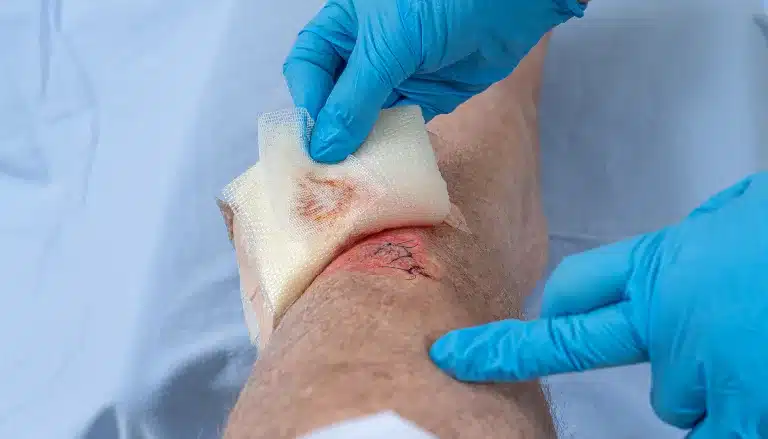
- Expected appearance: A fresh staple-removal site should show a well-approximated incision line. It’s normal to see mild erythema (redness), slight swelling, and perhaps a small amount of clear or weeping serous fluid. The edges of the wound should remain firmly together without any gapping.
- Minor reactions vs. complications: It’s crucial to distinguish between minor, expected reactions and red flags. As outlined by grading systems used to evaluate surgical site infections, normal post-removal signs like minor serous weeping or slight crusting are distinct from more serious complications such as significant or expanding erythema, purulent (pus-like) drainage, warmth, increased pain, or any visible wound separation or reopening. Emphasize patient observation during the first 24–48 hours to catch these signs early.
- The risk of dehiscence: The risk of wound reopening is highest in the immediate post-removal period. This risk is amplified in areas of high tension, such as joints or the back. Your role in this phase is to support the fragile wound with proper dressings and educate the patient on how to minimize stress on the incision, so as to directly mitigate this risk and ensure a successful healing outcome.
Wound Care After Staples Are Removed
Your actions as a provider during the staple removal process are vital—not only for preventing infection but also for ensuring the long-term integrity of the wound. Meticulous technique and careful assessment can significantly reduce the risk of complications and promote optimal healing.
Sterile Technique
Maintaining a sterile field is the first and most critical step. Use sterile instruments such as a sterile staple extractor and wear appropriate gloves.
The wound site should be cleansed with an appropriate antiseptic solution before and after staple removal to reduce the risk of microbial contamination. This practice, while fundamental, is a key preventative measure against surgical site infections (SSI), which remain a prevalent and costly hospital-acquired complication.
Gentle Removal and Assessment
Proper technique during removal minimizes trauma to the vulnerable, newly formed tissue beneath the surface. Each staple should be removed individually, and the extractor should be used to gently lift the staple away from the skin, being careful not not to pull or tug at the wound edges.
After each staple is removed, it is crucial to inspect the incision (laceration) line. Perform a thorough assessment of the entire area , checking for signs of dehiscence, excessive bleeding, or purulent drainage. Any unexpected findings should prompt you to question the wound’s readiness for the next phase of healing and consider further intervention.
Reinforcement with Wound Closure Strips
Reinforcing the wound with adhesive closure strips (e.g., Steri-Strips) is a standard and essential practice. These strips provide crucial support to the newly closed wound edges, acting as an external suture to reduce tension and minimize the risk of dehiscence. They also protect the incision from shear forces and external trauma.
Generally accepted guidance indicates placing the strips perpendicular to the incision line; however, one article in the International Wound Journal notes the efficacy of using a “zig-zag pattern,” where strips are placed diagonally and head to tail. This is an uncommon treatment method, but this research indicates promise in novel use of Steri-Strips.
The authors argue this method offers several advantages for wound management, including better distribution of tension, reduced risk of wound margin sliding, easier removal, and improved visualization for early detection of secretions and infections. The authors also highlight the technique’s cost effectiveness and ease of use.
Initial Dressing
Following the application of closure strips, a clean, non-adherent dressing should be applied to the wound site. This dressing serves multiple purposes:
- Protecting the wound from environmental contaminants
- Absorbing any minor serous weeping
- Providing a barrier against friction from clothing or other sources
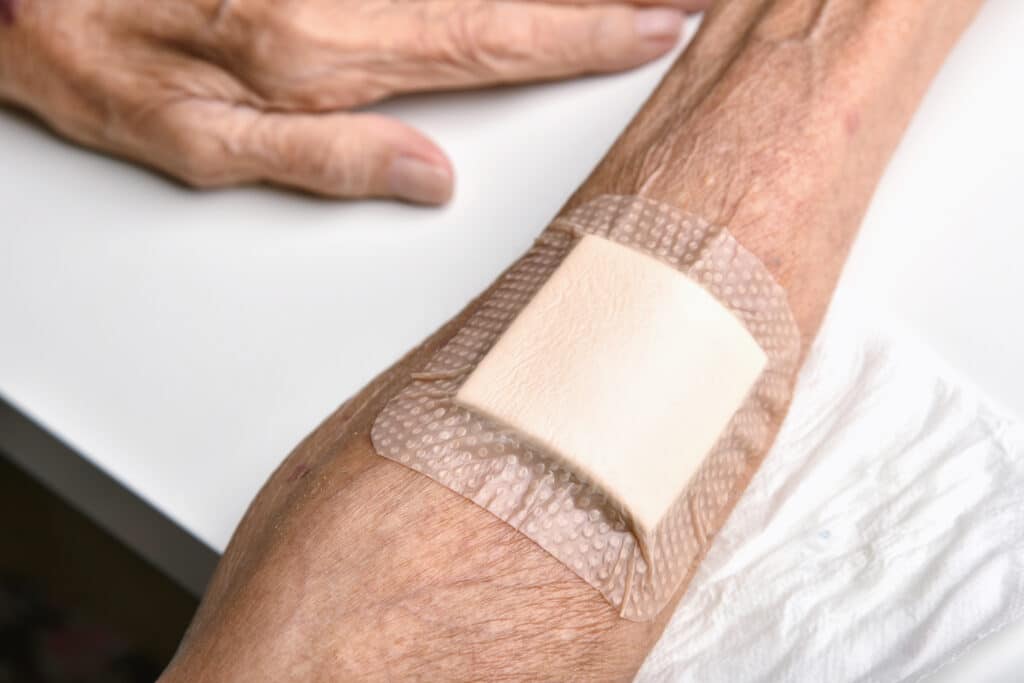
The dressing can typically be a sterile gauze pad secured with medical tape or a simple self-adherent dressing, depending on the wound’s location and size. Be sure to instruct the patient on how to care for this initial dressing and when to replace it.
At-Home Care for Wounds After Staples Are Removed
Educating patients on how to care for wounds after staples are removed is a crucial step in the post-removal process, as it empowers them to become active participants in their healing journey. Providing clear, actionable instructions can significantly improve outcomes and reduce the likelihood of complications.
At-Home Care Instructions
Patients should receive explicit guidance on how to care for their wound at home. This includes instructions on how and when to clean the wound.
Typically, gentle washing with mild soap and water is recommended 24–48 hours after staple removal. Tell the patient to avoid using harsh products like hydrogen peroxide or alcohol, which can impede healing. Patients should be instructed to pat the area dry and avoid exposing the wound in baths or swimming pools for a specified period. Set clear expectations for when normal showering can resume.
Protecting the Wound
Patient education must extend beyond basic cleaning. Discuss the need to avoid strenuous activities, such as heavy lifting, or any movements that could put excessive tension on the incision, which could lead to dehiscence.
A long-term care point of concern is sun protection. The new scar tissue is highly susceptible to hyperpigmentation, so patients should be advised to keep the area covered or use a broad-spectrum sunblock to protect the wound from UV radiation. This helps the scar mature with less discoloration.
Recognizing Complications
Another key component of patient education is equipping them with the knowledge to identify potential complications early. Review a concise list of “red flags” to look for, such as:
- Increasing wound pain or tenderness
- Expanding redness or warmth
- New or worsening swelling
- Any pus or foul-smelling drainage
- A fever above 38°C, or 100.4°F
Patients should be instructed to contact a relevant provider immediately if they notice any of these signs or symptoms.
Scar Management and Maturation
Finally, introduce the patient to the concept of scar maturation, explaining that a scar’s appearance will evolve over several months to a year. This helps manage patient expectations in healing, both internally and externally.
Discussing common scar management techniques, such as silicone gel sheets or topical silicone ointments, can be beneficial. You can explain that these products work by creating a moist environment and regulating collagen synthesis, which can lead to a softer, flatter, and less noticeable scar.
Alternatives to Staples and Their Aftercare
While staples are a common choice for wound closure, you may encounter other methods that require a slightly different approach to aftercare. Understanding these differences is key for comprehensive patient guidance.
Sutures
Sutures are a widely used alternative to staples and are either absorbable or non-absorbable.
Absorbable sutures dissolve over time and do not require removal. Contrastingly, non-absorbable sutures do require removal. Because of this, non-absorbable sutures require wound aftercare that is similar to post-staple care. Both types of sutures require support and monitoring to prevent dehiscence and infection.
Tissue Adhesives
For wounds under low tension and with a desired good cosmetic outcome, tissue adhesives (or surgical glues) are a convenient option. They offer a strong, flexible bond that protects the wound from external pathogens.
The key benefit of a wound closed with a dissolving adhesive is that it requires less maintenance and no removal of sutures or staples; patients simply need to be instructed to let the adhesive flake off naturally.
Other Wound Closure Methods
In some cases, multiple closure methods are used in combination. A common technique involves using deep, absorbable sutures to take the tension off the wound edges, followed by a superficial closure with either tissue adhesive or wound closure strips.
This combination provides excellent cosmetic outcomes and strong support during the early healing phase. Patients must be educated that while the external layer may appear simple and low maintenance, the deep sutures are a critical component of the closure and will dissolve over time.
Take a Proactive Approach to Post-Staple Removal Wound Care
Staple removal is a critical intervention that requires a thoughtful approach, careful assessment, and thorough patient education. As a practitioner, your diligence during this phase, from the use of proper sterile technique to providing clear at-home care instructions, can significantly influence the patient’s healing and long-term outcomes.
By taking a proactive and comprehensive approach to post-removal care, you not only manage immediate risks but also ensure the best possible cosmetic result and patient satisfaction.
2025 Report
Find Out What’s Happening in Wound Care Now