
July 29, 2025 | Net Health
10 min read

There are numerous factors wound care providers must keep in mind when working with patients and overlooking any of them can have devastating effects. Improper wound care practices can present significant economic and humanistic burdens that, for the most part, are largely preventable.
With a growing aging population and an increasing prevalence of autoimmune diseases, it’s more important now than ever before to dot your i’s and cross your t’s when it comes to wound care. However, with mounting workloads and staffing shortages, how are specialists supposed to keep up? For many departments, the answer is having a wound care checklist.
Below, we’ll explore what a wound care checklist is, how it can help improve patient outcomes, and potentially enhance your organization’s bottom line.
What Is a Wound Care Checklist?
If you’re familiar with wound assessments, you may know a thing or two about wound care checklists. However, just in case either is somewhat unfamiliar to you, we’ll provide a brief overview.
Understanding Wound Assessments
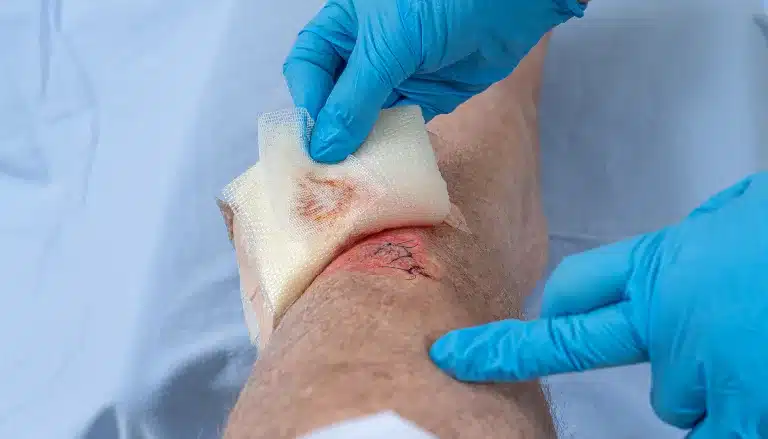
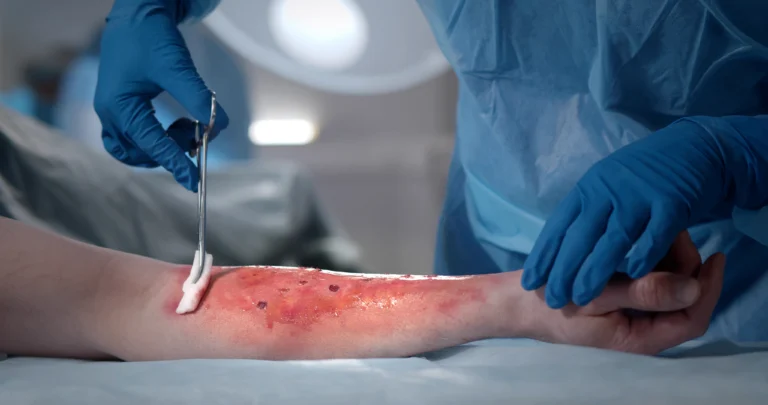
A wound assessment is a vital component of wound management, enabling an interprofessional care team to classify, monitor, document, and effectively treat the wound. Research indicates that they’re crucial to delivering quality care to patients and can optimize outcomes. In fact, one might say that successful wound healing begins with these vital assessments.
Clinicians are expected to complete assessments when a wound is first observed, and follow-up assessments should be conducted at least once a week. Doing so allows medical teams to compare information over time and determine how the wound is responding to treatment. It guides whether alternative interventions are needed by closely assessing:
- Odor
- Location
- Wound dimensions (size and depth)
- Amount of exudate
- Presence of pain
- Periwound skin
- Wound edges
- Signs of infection
- Wound base characteristics (color, texture, tissue type, etc.)
However, although these evaluations are helpful, they’re not without flaws. One concerning issue is subjectivity. There is a lack of consensus on wound assessments and therapy protocols, partly due to practitioners having varying types of training and experience. Research suggests that these discrepancies highlight the need for a universal wound assessment system, in which all healthcare professionals are trained to use.
The Role of a Wound Care Checklist
If you’ve ever done a wound assessment, then you know that there’s a lot of ground you need to cover. A complete initial assessment can easily take 10 to 15 minutes if you follow traditional practices. Clinicians must inspect, measure, conduct imaging, and then document their findings, with documentation typically taking the most time. Even today, it’s not uncommon for wound care specialists to provide printed and electronic notes.
With all these moving pieces surrounding the wound assessment, a wound care checklist is useful in ensuring that everything gets done. Think of it as a quality tool, as it’s designed to standardize processes by outlining specific actions that need to be performed during these assessments. They can help departments and practices maintain consistency and accuracy in a busy work environment, where overlooking something can negatively impact the quality of care.

What’s Included in a Wound Care Checklist?
The National Institutes of Health (NIH) recommends that a wound care checklist for wound assessment should include the several of the steps outlined below. However, please note that the checklist may need to be adjusted according to your specific practice.
1. Supplies
Practitioners should ensure they have all the necessary equipment and supplies to complete the wound care assessment successfully. This might include:
- Gloves
- Wound measuring tools
- Sterile cotton-tipped swab
- Scissors
- Mirror
- Alcohol hand gel
- Flashlight
- This isn’t just helpful in low-light environments. The improved visibility enables clinicians to observe wound bed characteristics and surrounding tissue more accurately.
- Cleaning solution
2. Safety Considerations
- Perform hand hygiene
- Check the room for transmission-based precautions (contact, droplet, and airborne)
- Introduce yourself, your role, and the purpose of your visit, and provide an estimated timeframe for your visit
- Confirm patient ID using two patient identifiers (e.g., name and date of birth)
- Explain the process to the patient and ask if they have any questions
- Be organized and systematic
- Use appropriate listening and questioning skills
- Listen and attend to patient cues
- Ensure the patient’s privacy and dignity
- Assess ABCs
3. Wound Location
It’s crucial that providers correctly document the anatomical position of the wound using accurate anatomical terminology. For example, you wouldn’t want to write that the wound is on the “left ankle”. It would be more appropriate to describe the following “medial aspect of the left malleolus”. Using clinical language minimizes the potential for ambiguity.
You can also include a body diagram to illustrate the location of the wound.
4. Type and Cause of the Wound
Confirming the type of wound helps practitioners determine the appropriate treatment plan. Ask yourself if it’s a:
- Pressure injury
- Venous ulcer
- Diabetic ulcer
- Abrasion
- Surgical incision
- Laceration
Verifying the cause further guides treatment. Did it occur from an animal, an accident, or a sharp object?
5. Tissue Damage
The assessment should include the extent of the tissue damage. All wounds should be classified as either a partial thickness or full thickness injury, except pressure injuries. The latter should be identified by their stage. The Braden Scale should also be used to assess the patient’s risk of developing pressure injuries.
6. Wound Base
Practitioners must evaluate the type of tissue present (granulation, eschar, slough) and the percentage of each type.
7. Wound Dimensions
The protocols for this may vary by practice, as there are numerous measuring strategies (e.g., clock-face method, AI-powered wound imaging tools, etc.). However, aim to use the same measuring method throughout the business to promote consistency. Clinicians should note the dimensions of the wounds, including their length, depth, and width, as well as whether there is undermining or tunneling present.
8. Amount and Color of Wound Exudate
Practitioners should evaluate and document the consistency, color, and amount of drainage at every dressing change.
The type of drainage should be described in clinical terms, such as:
- Serous
- Sanguineous
- Serosanguineous
- Purulent
The amount is often described in the following ways:
- No exudate present
- Scant
- Minimal
- Moderate
- Large/copious
9. Odor
Clinicians should document the absence or presence of odor. A malodorous wound suggests infection.
10. Surrounding Skin
It’s crucial to evaluate the color, integrity, and temperature of the wound edges and periwound area. How it appears can tell wound care specialists a lot about the wound’s etiology. For example, chronic wounds often have rolled edges, and macerated skin suggests inadequate exudate management.
11. Wound Pain
If the patient is experiencing pain in the wound or during draining changes, clinicians should use the multidimensional pain assessment, PQRSTU. The mnemonic stands for:
- P: Provocation or Palliation
- Q: Quality
- R: Region
- S: Severity (rate their pain on a scale of 0 to 10)
- T: Timing/Treatment
- U: Understanding
12. Signs and Symptoms of Infection
Note on the wound assessment if there’s any of the following indicators of infection:
- Redness
- Fever
- Pain
- Tenderness
- Swelling
- Purulent exudate
- Warmth of the periwound area
13. Conclusion of Wound Assessment
After completing the assessment, help the patient back to a comfortable position. Always ask if they have any questions and thank them for their time.
14. Safety Measures When Leaving the Room
Before you leave the patient’s room, double-check the following:
- Ensure the call light is within reach
- Make sure the bed is locked into its lowest position with the brakes on
- Secure the siderails
- Confirm that their table is within reach
- Scan the room for potential obstacles that could cause a fall or another injury
15. Hand Hygiene
Use alcohol-based hand rub or soap and water once you’ve finished caring for the patient.
16. Document According to Agency Policy
Documentation is critical to ensure that other care providers can refer to the notes and compare the wounds’ progress. The findings and evidence should be clearly reported using the methods identified by your practice.
Wound Care Checklists: Paper vs. Electronic
Wound care checklists are an excellent way to boost consistency and thoroughness. Yet, how they’re used can make a difference. For years, nurses relied solely on paper-based methods to document wound changes. This approach proved inexpensive and straightforward to use. However, manual documentation is also time-consuming. Practices often had to worry about:
- Handwriting errors
- Insufficient data analysis and report generation capabilities
- Damaged or lost records
Plus, if you ask most specialists, carrying around multiple copies of wound care checklists—or any other type of documentation, for that matter—isn’t exactly ideal. Furthermore, storing and retrieving documents consumes time that could be spent supporting patients.
Technological advances in wound care assessments have alleviated or limited many of those concerns, though. For instance, today, there are electronic health records (EHRs) designed specifically for wound care experts. They can streamline documentation and enhance care collaboration among healthcare providers, potentially leading to improved patient outcomes.
Optimize Your Wound Care Checklist with EHR Software
Imagine turning your checklist into a digital clinical workflow that improves staff workloads and enhances patient care. A wound care checklist workflow built into a robust EHR would outline the sequence of tasks that healthcare professionals must complete to conduct a thorough wound assessment.
Such a workflow has the potential to:
- Alert practitioners about missed steps or task delays
- Remind clinicians to perform an upcoming wound assessment
- Notify providers if healing has stalled
- Catch duplicates and/or omissions
- Aid in maintaining regulatory compliance
- Strengthen documentation
- Reveal bottlenecks
There are many more advantages to a digital checklist system, but whatever route you choose to follow, make sure your system is clear and descriptive for your staff.
Be Prepared for Value-Based Care Payment Models
Companies that primarily utilize paper-based wound care checklists may find it challenging to adopt value-based care models. The latter strongly relies on well-built workflows that prioritize collaboration, communication, and efficiency.
Reduce Steps, Dedicate More Time to Patient Care
An efficient workflow documentation system enables practitioners to spend more time face-to-face with patients, thereby improving patient care. When properly implemented, a practice’s current 15-step wound care checklist could potentially be reduced to just five steps once digitized. Just think: many of the time-intensive manual tasks associated with wound assessments, such as parts of documentation, could be automated.
Furthermore, some EHRs can automatically apply the correct code(s) for quick claim submissions. The latter may result in greater reimbursements and less time spent negotiating with insurers.
Embrace Changes with Ease
Additionally, these workflows can evolve as patients’ needs and regulations change, ensuring clinicians don’t fall behind.
Do Even More With AI-Powered Wound Imaging
Earlier, we mentioned how one of the flaws of wound care assessments is subjectivity. Even highly-skilled clinicians can complete the assessment checklist with the potential for skewed results—though the more experience you have, the better you’ll be at these. Practitioners may answer questions regarding wound dimensions, exudate amounts, and even wound types in various ways, which can negatively impact patient care outcomes.
Fortunately, artificial intelligence (AI) may be able to help with that. For instance, researchers are teaching deep learning models to perform objective tissue identification and measurement. They’ve already proven beneficial in reducing pressure injuries and are expected to eventually have the same effect on other wound types.
With this form of wound imaging, certain wound care checklist steps could change in the next few years as the technology is integrated into your workflows. For example, instead of using a ruler to measure a wound manually, the right technology can capture an image and then leverage advanced image analysis to reveal accurate measurements. The technology may also indicate the tissue type, the percentage of each type, and predict the likelihood of healing.
Combining the efficiency of wound care workflows with the accuracy of AI in wound imaging can revolutionize practices, allowing them to do more. Businesses that leverage technology will likely see lower infection rates, accelerated healing, and a positive return on investment. This is huge, given the growing prevalence of chronic wounds and aging population mentioned earlier, on the horizon.
Digital Wound Care Checklists Are the Future
Whether your business is a wound care clinic, home healthcare agency, or long-term care facility, a wound care checklist clinical workflow can be customized to fit the specific needs of your practice.
Patients’ demands are continually changing, and those seeking to thrive in the healthcare industry must be prepared to adapt to these fluctuations. Use technology to maximize your team’s clinical expertise and stay ahead of the competition.
THE FUTURE OF CARE
Your Guide to Restorative Healthcare Trends
Stay ahead in the ever-evolving healthcare industry with our new Trends Hub. Explore cutting-edge insights and the latest developments shaping the future of care. Your go-to destination for staying informed, inspired, and ready to innovate.